

Perspectives

Tenets for Greater Sustainability

Powering Southeast Asia’s charge to a sustainable future

Download full PDF (1 MB)

Credits

Analysts
Mr Ang Wei Xuan, Summer Analyst

Research
Mr James Tan

Overview

The world’s population reached 7.9 billion in 2021. Its resources are already being pushed to the brink, and we are facing unprecedented social inequalities, environmental degradation, and governance issues.

Without taking the necessary steps to mitigate these effects, we are poised to see temperatures rise by 1.5 to 2ºC by 2050. The resultant detrimental effects, including a large increase in the frequency and scale of natural disasters, spread of diseases and ecosystem disruption will make life untenable for many regions, including Southeast Asia.[1] This will derail the lives of millions, and it would not be unfair to say that how governments, corporations & communities come together to tackle this mammoth problem will define the lives of many generations to come.

The severity and urgency of the problem has seen hitherto silent stakeholders begin taking action to ensure sustainability on all fronts. In this regard, we believe that early stage venture capital can serve a crucial role in resolving critical problems by financing and developing innovative tech-based solutions. The dual goals of profit and impact allow leveraging of market forces to scale quickly and effectively. This report aims to provide an insight into the ongoing sustainability efforts, trends and outline the reasons for our bullish sentiments towards sustainability-focused investing.


Foreword

Mr James Tan
Managing Partner
Quest Ventures

The ‘take-make-waste’ industrial model is no longer feasible. With a larger GDP than the rest of the world combined, and as the fastest growing economic region, what Asia does as it rises will have a significant impact.

With a trillion dollars in economic benefits if efforts to go green in Asia go right, and climate change and other disastrous effects if the efforts do not, the stakes are high. 

We believe that governments need to push for sustainable practices on a national, regional and international level.

We believe that businesses must align between sustainability and corporate gains. Old and new businesses alike must commit to incorporating ESG goals in their key decision making.

We believe that the financial services industry can encourage industries to implement ESG criteria into their decision making, as well as rewarding efforts made towards sustainable development.

Time is not on our side. Our three tenets are merely a starting point. Governments, corporations, and individuals that want to do more can count on increasing awareness and support globally to drive changes. We look forward to working with them towards a sustainable future.


Defining Sustainability

The 1987 United Nations Brundtland Commission’ defined sustainability as the goal of “meeting the needs of the present without compromising the ability of future generations to meet their own needs. Today, sustainability is inevitably centered around environmental issues. However, we must keep in mind that sustainability also encompasses social issues like inequality, as well as economic issues such as trade, and that all these issues are often intertwined. 

Since the Industrial Revolution, the onset of capitalism and the industrial economic model has seen humanity consume resources at an unprecedented rate. Conservation of the environment was but an afterthought as natural resources were exploited for economic growth. Modern superpowers such as the USA and various European countries built their success on the back of the deployment of large quantities of less efficient technology, powered by finite natural resources. That has already caused irreversible damage to the ecosystem, creating issues such as global warming, extreme weather events and environmental degradation.

As of June 2021, the world population has reached approximately 7.9 billion. Sustaining so many on the old ‘take-make-waste’ industrial model is no longer feasible, and will only exacerbate the harm to our planet. We need to find ways to make more from less, focusing on social and environmental outcomes instead of economic ones. 

However, it is a tremendously unfair request from the Western developed countries (NOA, EUR) for countries in developing regions (APAC (including SSEA and EAS), MENA, LAC, SSA) to forgo the same tools and methods that had worked so well for them in their pursuit of economic development. 

As such, an integral determinant to the success of the sustainability push is how developing regions incorporate sustainable development as they rise.

Of particular importance will be Asia’s approach. Asia is the fastest growing economic region today, with a larger GDP than the rest of the world combined, both in nominal and PPP (Purchasing Power Parity) terms. By 2030, Asia will be home to 60% of global growth and 4.9 billion people.[2] While China, Japan and South Korea are already global leaders in green technology, how the rest of Asia adapts will become of paramount importance to the global fight for sustainability.

The physical effects of unsustainable growth, combined with growing research in and awareness of climate science & environmental issues have pushed sustainability to the forefront of the collective human consciousness, where it had once lingered at the back of for years. People today know that the fundamentals underpinning economic growth must change.

The UN has contributed towards pushing for global cooperation in this regard, and the well-known Sustainable Development Goals (SDGs) spur ambitious targets for companies, countries and individuals. Reaching them can only be achieved via sustainable practices. This can be defined as generating positive value for stakeholders, or not harming them at minimum, and improving environmental, social and governance (ESG) performance in areas where one has an impact.[3] However, the increase in adoption of sustainable practices by countries and corporations in recent years has its roots not just in lofty aspirations, but also in more practical reasons.


Governance Case for Sustainability

Traditionally, governments have avoided pursuing an overt sustainability agenda. While Bhutan has achieved carbon negative status, it did so at the expense of economic growth; few developing countries are willing to make that tradeoff.[4] Sustainability seemed to be a luxury only wealthy countries could afford. 

However, in the face of worsening climate risks, developing Asian governments have become increasingly aware that they can no longer afford to focus exclusively on economic growth and leave sustainability for later. They have to achieve both in tandem, or risk facing larger problems in the future.

High Stakes & Strong Motivations

Asia, and to a large extent Southeast Asia (SEA), is particularly vulnerable to climate change, due to the concentration of economic activity and population along coastlines and the reliance on agriculture, forestry & natural resources for livelihoods. Rising temperatures, sea levels, increased frequency of natural disasters (floods, cyclones, heat waves) and decreasing rainfall are effects that governments cannot afford to sit back and ignore. The rapid onset of pollution and degradation has had far-reaching consequences on the standards of living for citizens in Asian countries. Studies have also shown that deforestation and climate change increase the risk of zoonotic disease transmission (such as COVID-19). Becoming more sustainable has become a key socio-political promise for governments, with good reason. 

In the absence of appropriate adaptation and mitigation measures, McKinsey predicts that by 2050, up to $4.7 trillion of GDP in Asia will be at risk annually due to increased heat and humidity causing a loss of effective outdoor working hours.[5] It has also been predicted that by 2050, the exacerbation of natural disasters could cause $1.2 trillion of damage to capital stock from flooding in any given year and cause up to 40% of land area to experience shifts in biomes, affecting ecosystems and livelihoods. These effects have been corroborated by independent research done by the Asian Development Bank (ADB), which projects a decline of up to 50% rice yield potential and 6.7% combined GDP each year by 2100.[6]

Significant Potential Upside

On the other hand, Asian and South-East Asian economies have much to gain by focusing on greening their economy. A report by Bain claims that SEA could see up to US$1 trillion in economic benefits up for grabs by 2030 if it successfully builds a green economy and becomes a more attractive investment destination. [7]

Research done by think tanks ClimateWorks and Vivid Economics posit that a low-carbon industrial strategy could be the golden opportunity for ASEAN to recover from COVID-19.[8] They argue that ASEAN member countries are uniquely positioned, being both in close physical proximity as well as possessing strong existing trade relations with China, Korea and Japan, the current leaders in low-carbon technology. Combined with lower wage structures, improving infrastructure and a supportive legal environment, ASEAN is an attractive prospect for the leaders looking to scale up production and build more resilient supply chains. This opportunity for technology and expertise transfer for ASEAN countries to restructure their own economies while providing sustainable jobs for the economy.


Business Case for Sustainability

Thankfully, the policymaker’s viewpoint is shared by the corporate world. Leading management consulting firms such as Accenture and McKinsey have argued that sustainability and the circular economy represent the greatest business opportunity in over 100 years.[9] Traditionally, ESG goals were only pursued by companies on the basis that it coincided with their business philosophy or core values. Today, ESG goals are pursued because the double bottom line has been proven to be achievable, and there are tangible benefits to proactively integrating sustainable practices into one’s business strategy.

Managing Risks

Supply chains have a history of being affected by events outside any company’s control. Resource depletion and degradation of natural capital assets have the potential to rack up staggering losses for overly dependent corporations. By investing in the appropriate green technology and pivoting to more sustainable practices, corporations can reduce their vulnerability to resource scarcity and supply chain disruptions, but also avoid potentially having stranded assets. 

Bolster Performance 

A summary of 200 studies investigating the link between corporate performance and ESG goals done by the University of Oxford and Arabesque has posited that good ESG performance positively correlates to better stock price performance, operational performance and lower cost of capital in more than 80% of all cases. [10]

Mounting Investor Expectations

While ESG reporting is not a new phenomenon, it has only been in recent years that institutional investors have pushed for greater accountability of companies with regard to ESG challenges. This is in line with greater civic consciousness and expectations for companies to step up and contribute to solving issues like income inequality, climate change etc.

The 2020 EY Global Institutional Investor Survey of nearly 300 institutional investors shows that 91% used non-financial performance as a pivotal consideration in investment decision-making, and investors are set to consider it even more rigorously as the links between ESG performance and financial performance become clearer.[11] Despite the setbacks of the COVID-19 pandemic, investors have not reverted to short-term performance models. Rather, it has cemented the importance of long term resilience and the crucial role ESG performance plays in achieving that. Investors are also holding companies accountable, and those that fail to meet expectations risk losing precious access to capital markets. 

The wealth transfer to the younger generation has also seen a shift in investing philosophies, with surveys showing that Millennial respondents are more committed towards achieving social impact and long-term value creation with their investments than simple financial gains.[12] 

Larry Fink, CEO of Blackrock, has testified to the shift in client priorities towards climate change and sustainability agendas, most recently in his 2021 letter to CEOs.[13] This is a reflection of the growing number of institutional investors, not just Blackrock, that are demanding both greater reporting and moving their investments towards sustainability-focused companies. 

Companies looking to navigate through the changing financial services landscape will have to adapt to mounting pressure from investors with regards to sustainability. 

Mounting Consumer Expectations

In the past, consumers had previously balked at paying extra for sustainable products, and companies with sustainable products at higher prices were typically doomed to failure. However, changing consumer trends, spurred in part by the coming of age of the environmentally & socially-conscious millennials/Gen Zs and enabled by increasing levels of wealth in a post-recession world, have fuelled an increase in the demand for products whose brands display evidence of corporate social responsibility, sustainability and respect for others.

Recent empirical research strongly supports the existence of ‘shared value’, the proposition that companies can do well by doing good.[14] This offers companies the opportunity to build new global brands specialising in green products and surpassing large incumbent competitors. For example, EV companies have the opportunity to upstage traditional car manufacturers as trends change. 

According to the Harvard Business Review, companies can even charge up to 20% price premiums based on positive corporate responsibility practices.[15] This strong customer motivation to support sustainability further shows itself in the form of consumer support for a range of trustworthy sustainable products & services, creating superior revenue growth channels for companies. [16]

Achievable Double Bottom Line

Corroboration by multiple sources and the cumulative efforts of research done over the years has made it apparent that the double bottom line is no longer imaginary. A pivot to sustainability is as inevitable as it is necessary. The earlier companies recognise and make efforts to reposition themselves, the better poised they will be to ride through the green revolution. We can expect that as the business case becomes more apparent to top management, sustainability will be adopted at an increasing pace.


Categorising Businesses Based On Their Approach to Sustainability

Today, we can categorise businesses into 4 main categories based on their approach to sustainability.[17] Out of these four, three types are receptive towards ESG goals, namely: 

1. Businesses in industries with traditionally unsustainable supply or value chains, but are committed to pivoting towards environmentally friendly processes and products. Examples include those in the automotive industry that are making the switch to EVs or those in the consumer electronics industry that are considering social issues such as minimum wages, living standards and conservation of resources/recycling. 

2. Businesses that disrupted older business models and brought about positive ESG-related impact as a byproduct. Examples include ride-sharing companies such as GoJek, Uber, Lyft, Grab that have reduced the need for everyone to purchase a car by making ‘private’ transport ubiquitous and cheap, conserving the resources associated with car production and ownership. In Singapore, BlueSG is pioneering accessible EV rental. Airbnb has minimised hotel wastages by capitalizing on spare bedroom capacity globally.

3. Businesses that are driven by sustainability from the onset. This includes any form of social enterprise or primarily impact-focused businesses. Internationally, examples include Unilever and Novelis.

The last type of businesses however are standing in the way of widespread adoption of sustainability. This group comprises of: 

4. Large businesses in legacy/sunset industries such as those in coal, gas or petrochemicals, that still have significant political/lobbying influence where they are based.


Three Tenets For Sustainability

Growing awareness within the public and private sectors of the perils of feckless and unrestrained industrialisation has prompted increased attention to the subject of sustainability. It is heartening to see that all UN member states have signed commitments to the UN’s Sustainable Development Goals (SDGs), and companies are making visible efforts to achieve sustainable milestones. Regionally, we are also seeing increased attention and support by blocs such as the EU and ASEAN, and there have been many other international agreements in pursuit of sustainability goals, such as the Paris Agreement, the Sendai Framework for Disaster Risk Reduction, the New Urban Agenda etc.

To bring the quest for sustainability to the next level, we believe that there are three mutually reinforcing keys that need to be employed in tandem.

Firstly, there needs to be support from the respective governments to push for sustainable practices on a national, regional and international level. 

Secondly, businesses must become increasingly aware of the ever-growing alignment between sustainability and corporate gains. This can be achieved in two tranches. Existing businesses need to be convinced of the positive correlation, and subsequently commit to re-pivoting & incorporating ESG goals into their key decision making. Additionally, new sustainable impact-focused businesses must be given the opportunity to grow, provided that they meet critical criteria for success, both in terms of impact and in terms of profitability. 

Lastly, the financial services industry needs to accomplish the dual roles of pressuring industries to implement ESG criteria into their decision making, as well as enabling and rewarding efforts made towards sustainable development. This will be crucial in pushing industries towards the tipping point.[18] 

Quest Ventures is a long-standing believer in the business case for sustainability. In our 2020 publication done in collaboration with INSEAD MBA, we firmly stated our belief that business and ESG impacts are not mutually exclusive.[19] 

While most demonstrated success has been in tech-related startups in Indonesia, Quest Ventures today is actively searching for start-ups with impactful value propositions and solid business models, operating within SEA, across a range of verticals. In our opinion, technology is key to ensuring that sustainability is synonymous with growth. 

We have high hopes for the SEA region in particular, as there is notable progress being made towards unlocking the region’s sustainability. In this report, we will also be discussing Asia’s potential, how close it is to realising that potential and where we expect to see the largest developments in sustainability unfold.


The First Tenet: Governments

Private Sectors Follow The Government’s Lead

The business environment in Asia has historically been strongly intertwined with government prerogatives and the public sector. Governments provide the necessary support and confidence for businesses looking to test new waters, and their commitment provides strong impetus for the private sector. 

This is exemplified by the Singapore government’s approach to building ecosystems within the economy, such as the start-up ecosystem back in 2015.[20] This ranged from broader policies such as positioning itself as a launchpad into SEA and a general openness to foreign talent and investment, the long-term commitment to the end-goal and vision for the local start-up scene to smaller details such as the fostering of a close community within a start-up hub (Block 71 in Ayer Rajah, JTC Launchpad), the nurturing human capital (the NUS Overseas Colleges (NOC) programme, SMU’s Institute of Innovation and Entrepreneurship (IIE) etc.) and capital investments (indirectly) through Temasek Holdings. It is clear that when governments are onboard and committed to certain agendas, there will be sufficient traction to overcome inaction and uncertainty in the private sector. 

Another case study would be the importance of government initiatives in promoting the uptake of green technology. Globally, early attempts to introduce electric vehicles to the markets failed to make headways. Alongside improving technology and lower costs, electric vehicles have finally managed to take off, but only after governments stepped in with additional initiatives to supplement the manufacturers’ best efforts. These include CO2 emissions regulation schemes (e.g. in China, EU, California), efforts to expand the charging infrastructure in countries and subsidies to make EVs viable and competitive options against vehicles with internal combustion engines.[21] It is clear that the EV market would not have developed to where it is today if governments had taken the backseat. In Singapore’s Green Plan 2030, it intends to double the number of EV charging points to 60,000 by 2030, and gradually phase out internal combustion engines. It has also tightened the various vehicle emissions schemes in a bid to shift consumers to hybrid and electric vehicles. This marks the first of many ASEAN countries’ attempts to shift the citizenry towards EVs, where there has been little to no mainstream adoption before. 

In this regard, governmental buy-in is an essential first step for convincing businesses and individuals to come aboard. Likewise, when it comes to ensuring a concerted push for sustainability across sectors, governments must lead the way, in order for this to be implemented into business strategies and personal actions.

While the COVID-19 crisis has had a devastating impact, it has also provided the opportunity for countries to restructure and rebuild back greener. In this regard, Europe leads the rest of the world in its efforts to resurrect itself as a greener economy. In the next few years, billions of dollars will flow into infrastructure and business investments across Southeast Asia and the entire Asian continent as well, and this opportunity needs to be grasped to strike a proper balance between social & environmental capital and economic outcomes, as discussed briefly earlier.

Questions Over Commitment

However, some remain skeptical of the prospects, pointing to studies showing that governments have been split with regards to their approach. An ING report offers the following analysis of several APAC/SEA countries and their Environmental Performance Indicator and green spending as a percentage of total Covid-19 stimulus. There is a clear discrepancy between countries like Singapore and countries like the Philippines and Indonesia.

Figure 1: Environmental Performance Indicator & Green Spending as Percentage of Total Covid-19 Stimulus [22]

Additionally, some point to certain indicators within Asia-centric measuring indexes, such as the Hinrich Foundation Sustainable Trade Index (STI) that allows us to get a more in-depth analysis of 19 Asian economies and how they fare in terms of sustainability across 3 factors: economy, environment and society.[23] 

Taking a closer look at Indonesia, we see progress being made with regards to labor standards and educational attainment, and it has also increased factors like financial sector depth and technological innovation while reducing trade in natural resources.[24] However, Indonesia continues to do poorly in terms of environmental factors such as transfer emissions and air pollution. 

Meanwhile, Vietnam regressed relative to other Asian economies in terms of social and environmental sustainability, showing declining labor standards and a lack of improvement in environmental considerations relative to 2018. [25]

Furthermore, some point towards ASEAN’s lackluster performance with regards to reaching its 2030 Sustainable Development Goals, where it continues to poorly perform with regards to environmental sustainability despite having made significant progress on socio-economic fronts.[26]

Cause for Optimism 

Nevertheless, we are optimistic that Asia and ASEAN will still be able to build back post-COVID, more sustainably than ever, due to several mitigating factors. 

Firstly, as the ING report rightly acknowledges, several countries are progressing on a “background of general environmental progress”.[27] It is also important to note that sustainability goes beyond environmental performance, and that we are looking for more than government spending, but the development of an environment that encourages private sector attention and adoption of sustainability on a national and regional scale. 

Secondly, we cannot focus solely on negative aspects highlighted in the STI. While some countries have consistently done well on the STI, such as South Korea and Japan, others are still making good progress in other areas.[28] For example, China has made significant progress in reducing air pollution, while Pakistan reduced its deforestation considerably. Indonesia, Myanmar and Laos managed to diversify their trade bases away from natural resources, and Singapore also managed to reduce air/water pollution while implementing carbon pricing and lowering transfer emissions (pointing towards cleaner export industries).

This leads us to the conclusion that there is still progress being made overall, bearing in mind that the STI ranks economies relative to one another based on current achievements, and uses that as a proxy to measure progress towards meeting the Sustainable Development Goals.   A low ranking does not necessarily mean that nothing is being done in any particular regard. In fact, we are witnessing pivots to sustainability in many countries that might require several years to bear fruit. The existence of the STI serves to continually suggest areas for improvement for both the public and private sector to come in and plug the gaps, and should not be taken as a pessimistic outlook for the region. Rather, the existence of such academically rigorous comparisons indicate that sustainability on all fronts is being taken increasingly seriously, and play an important role in encouraging the various governments to do better. 

In fact, encouraging development has always been brewing in Asian countries. To provide some balance to the earlier discussion, it is important to note what countries like Vietnam, Indonesia, Singapore and even China have been doing with regards to meeting the SDGs. 

Vietnam managed to move from being one of the poorest countries in the 1980s-1990s, to lower middle-income status by the 2010s, while keeping the SDGs in sight, and even presented a National Report on Sustainable Development at the UN Conference on Sustainable Development (RIO+20) in 2012 and a Voluntary National Review of its progress towards the SDGs in 2018. [29,30]

Vietnam continues to incorporate SDGs into its national development strategy, such as its previous 2011-2020 Social and Economic Development Strategy (SEDS) and 2016-2020 Social and Economic Development Plan (SEDP), and upcoming 2021-2030 SEDS and 2021-2025 SEDP.[31] The government has also done good work in encouraging sustainable practices and investments in the private sector, with initiatives such as the setting up of the Vietnam Business Council for Sustainable Development (VBCSD) and the creation of an enabling legal environment.[32] A more detailed report of Vietnam’s development and SDG progress is available from the IMF.[33] 

It is also crucial to note Vietnam’s track record of efficiency with regards to adopting sustainable practices. This is shown through their achievement of installing 5 gigawatts (GW) of solar energy by 2020, exceeding their 1GW goal.[34] This also highlights the ability of Southeast Asian countries to execute plans quickly and effectively, bolstering our confidence in the region’s prospects. With Vietnam being Asia’s top performing economy through the pandemic, it is not a stretch to say that sustainable development will find its way into the government’s priorities again soon, and that this run of poor form is but a blip on an otherwise stellar trajectory. [35]

We also saw Indonesia launch its first sustainable development plan, the RPJMN 2020-2024 in January 2020. Research done by the Ministry of National Development Planning in collaboration with the World Resources Institute found that sustainable, inclusive growth could “deliver average GDP growth of 6 percent per year through 2045 and, compared to business as usual, create more than 15 million additional greener and better-paying jobs, halve extreme poverty, and save 40,000 lives annually from reduced air and water pollution – all while reducing greenhouse gas emissions by nearly 43 percent by 2030, exceeding Indonesia’s current international target.”[36] Buoyed by the prospects, Indonesian policymakers are doubling down on efforts to roll out low carbon development initiatives, and we believe that Indonesia stands a good chance of success with the scale of their efforts. 

In Singapore, the government also continues to push for greater sustainability across all sectors of the industry, having recently unveiled the Singapore Green Plan 2030.[37] This is a comprehensive plan that aims to garner buy-in from the citizenry and private businesses through initiatives including, but not limited to, the Eco Stewardship programme, greening of resource-intensive industries such as the petrochemicals industry, and the Enterprise Sustainability Programme to support local enterprises to adopt sustainable practices and seize opportunities in the sector. Singapore intends to position itself as a sustainability solutions hub, offering tech solutions for water treatment, upcycling, urban farming, decarbonization etc. There is also awareness that sustainable technology in areas such as agriculture can be used to further other goals, such as Singapore’s ‘30 by 30’ food self-sufficiency. 

We remain optimistic that individual member states of ASEAN recognise the importance of sustainability, and that armed with the data from research and the growing technology available, they will be able to tackle the various issues that have drawn attention from detractors. As a regional entity, we believe ASEAN will continue to play a formative role in promoting sustainability by providing the right environment for growth. This includes, but is not limited to: regional cooperation, laying out regional standards for sustainable finance and monitoring sustainability efforts. 

On a larger scale, we have seen Asian countries make significant pledges to meet the Paris Agreement’s goals. A large number of these initiatives revolve around achieving carbon neutrality, adopting new energy sources or reducing the emissions intensity of GDP. [38] It is inevitable that governments will have to step in and provide the necessary carrots and sticks to attain these goals.


The Second Tenet: Businesses

Becoming Aware Of The Business Case

While the business case for sustainability constitutes an indisputable fact, sustainability cannot succeed if corporations and businesses do not acknowledge or implement strategies according to it. Presently, the business case is catching on quickly via two methods.  

The first method is organic, as management becomes self-aware of the impacts caused by both the supply chain and value chain. This can come about through generational power transfers, as existing businesses hand over management responsibilities to a younger generation of CEOs. A study of young CEOs in China proved that they are more conscious about their ESG footprint and have higher tendencies to adopt sustainable practices within their companies (Shahab, Ntim 2019).[39]

The second method is through third-party pressures strong enough to overcome entrenched resistance. In this approach, there are some overlaps with the business case, such as investors and consumers demanding greater accountability and moving towards more sustainability-focused companies.

Internally, throughout the corporate ladder, employees are becoming increasingly vocal about value-alignment with the company they are working with. When it comes to hiring and retaining top tier talent from the millennial generation, a survey showed that nearly 40% decided between jobs based on the company’s sustainability performance, while almost 70% of respondents said that a company’s sustainability plans would influence their long-term decision to stay.[34] Performance indicators and employee happiness also increase when employees think what they are doing has meaning.This complements a large body of research that points to the growing phenomenon of workers choosing value creation over wealth generation.[41] Ultimately, the speed and efficacy will depend on the willpower and action of various stakeholders mentioned above. 

For the companies that have caught on to the winds of change, there are several essential steps that can be taken to prepare their company. 

First, corporations should conduct an honest appraisal of their current business practices and environment. This will involve examining the industry they operate in, their supply chain, as well as their value chain to note the impacts that their product/production processes are generating. 

There are many available scoring systems that companies can choose to use, one such system being Hedstrom Associates’ proprietary Corporate Sustainability Scorecard.[42] In short, this evaluates a company’s sustainability efforts in terms of 4 key aspects: Governance and Leadership, Strategy and Execution, Environmental Stewardship and Social Responsibility. Each section had 17 elements and 8-12 sub-elements, totalling about 150 Key Sustainability Indicators (KSI). A thorough evaluation will allow management to determine how far along the company is on the path to sustainability, how they compare to peers and competitors, and what the best practices today are. This will pave the way forwards with regards to the next steps that the company should be taking. 
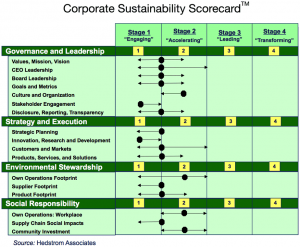
Figure 2: Corporate Sustainability Scorecard [43]

With regards to environmental stewardship, a common ideal for businesses across industries should be the attainment of a circular economy. This refers to an economy where waste and pollution is reduced, products and materials are reused & recycled and natural resources are regenerated. This concept applies across the supply chain and the value chain, so we will briefly cover some of the general aspirations.[44]

Reduction: This can be defined very broadly to encompass a variety of processes. Constraining ourselves to the supply chain, there are several ‘reductions’ that companies should aim for.

One of them is to reduce the negative externalities created during production. For example, aiming for carbon neutrality is a fine goal for those in the manufacturing line, and beverage companies such as the Coca-Cola Company might pursue water neutrality. Additionally, companies should seek to reduce the amount of raw materials necessary, especially if the process of obtaining said materials endangers the environment (mining, logging). This amounts to a need for innovation, both to discover alternatives and to discover more efficient ways of production. 

With regards to the value chain, reduction is typically done by consumers, by being more mindful of their consumption and not to be as wasteful. On the companies’ end, we prefer to term their efforts in reducing waste as reusing and recycling. 

Reuse & Recycling: Companies should try to recover and recollect used consumer goods or byproducts from the production process, and reuse or recycle them for other purposes. This is especially pertinent when it comes to plastic products, which do not biodegrade in landfills, or for rare metals used to produce electronics and are already in scarce supply. By lengthening the lifespan of each material, we will need to use less in the long run. 

Regeneration: Companies that have no choice but to use natural resources such as timber should be proactive in the regeneration of forests. Switching to renewable resources (such as solar power as opposed to fossil fuels) for certain processes will also go a long way in stretching the lifespan of the finite resources we have left. In fact, they should be prioritised and implemented where possible. 

When it comes to social responsibility, all corporations, regardless of the scale of their operations, have the bare minimum responsibility of making sure that their business activities do not infringe or compromise on the quality of life for local communities, diminish their dignity or threaten their way of life. The best practice for corporations would be to rise while simultaneously uplifting the community that they are based in. This could be through providing fairly compensated employment, providing sufficient employment benefits, bearing the cost of building shared infrastructure (e.g. roads) or supporting the community through various other means. Companies should be going beyond the bare minimum stipulated by the law. Even in the absence of proper regulation, companies should be mindful and aware of these issues, not just out of compassion but also to not draw the ire of the public eye, as Apple, Nike and Volvo have learnt the hard way. 

By virtue of their size and the value of the foreign direct investment they represent to developing countries, large corporations have the power to make certain prerequisites before committing to a new plant or factory in developing countries. This gives them the opportunity to make positive change, such as pushing governments to incorporate proper labour laws, safety regulations and requirements in order to become more attractive. Companies should not exploit the lack of such governance, but rather set the precedent and industry standards where possible. 

Second, businesses need to engage in greater sustainability reporting. In some cases, certain metrics are not being measured at all, and in other cases, the impacts are not fully investigated. Where possible, corporations should continuously seek to implement new technology that allows for accurate tracking, diagnosis and reduction of detrimental impacts. 

Instead of having to retroactively modify old policies, start-ups might find it easier to embed ESG policies into their fresher business practices. On the other hand, startups might also be pioneering new concepts and technology that already have a sustainability-related value proposition. 

Regardless, the key for businesses is to possess a management both aware of the risks ahead and committed to contributing to sustainable development. We can thankfully count on the fast-changing financial services landscape to bolster these dual factors.


The Third Tenet: Finance

An Overview of Sustainable Finance

Sustainable finance, as defined by the Monetary Authority of Singapore (MAS), is “the practice of integrating environmental, social and governance (ESG) criteria into financial services to bring about sustainable development outcomes, including mitigating and adapting to the adverse effects of climate change.”[45] In addition, the European Commission states that “Sustainable finance also encompasses transparency when it comes to risks related to ESG factors that may have an impact on the financial system, and the mitigation of such risks through the appropriate governance of financial and corporate actors.”[46] In recent years, there has been growing understanding that businesses and governments will need the financial sector’s assistance in order to grasp the high-risk high-return opportunities associated with sustainability, and that the UN SDGs will be unobtainable without them. 

This has opened the door for companies to issue financing instruments (sustainable bonds) for the specific purpose of environmental/social projects. These instruments include green bonds, social bonds and sustainability bonds, which must be exclusively used for projects that bring about positive environmental/social impact. These open new financing channels for companies to pivot successfully, or undertake new climate/environmental related projects. 

Another class of financial instruments, Sustainability-Linked Bonds (SLBs), are bond instruments which tie the financial/structural characteristics according to whether the issuer achieves predefined sustainability KPIs or ESG objectives. This provides financial institutions with the opportunity to lay down industry-agnostic and industry-specific metrics for sustainability/ESG objectives. These have grown in number along with the development of measurement metrics for sustainability objectives, such as the Sustainability Accounting Standards Board’s Materiality Map.[47] As our understanding of important indicators develops, it becomes easier for investors to not only trust green investments, but also sift through and evaluate opportunities. 

Movements in Asia by governments and financial institutions mean that these new classes of financial instruments are rapidly catching on. According to a Moody’s report, Asia Pacific issuers accounted for 24% of global dollar-denominated green bond issuance, up from 8% 5 years ago.[48] 

As of 2019, the Asian Development Bank (ADB) has issued $7.9 billion worth of green bonds since its first issuance in 2015.[49] Nikkei Asia estimates that the Asian dollar-denominated green-bond market is now worth USD 50 Billion, and HSBC adds that despite the downturn caused by COVID-19, issuance will return to pre-pandemic levels in 2021.[50]

In March this year, J.P. Morgan led Asia (ex-Japan)’s first SLB, with a $200 million note for Hong Kong-based property developer New World Development (NWD).[51] This offering was hugely oversubscribed, and is reflective of a greater phenomenon in the sustainable finance sector, with demand for green bonds consistently outstripping supply (by almost 6x). 

These new types of financial instruments have caught the eye of fund managers and Asian investors for several reasons. 

Firstly, there is evidence that bond returns from green bonds are in line with returns generated from traditional financial instruments. This helps to allay concerns that expected returns will be compromised for the sake of particular agendas. Another draw is that Asian green bonds remain priced consistently with conventional bonds, whereas in Europe investors would have to pay an 9 basis-point price premium on average for holding European green bonds. The homogeneity between asset classes has contributed to the positive reception in Asia. 

Secondly, the governments of regional powers have moved to support the burgeoning investment sector. For example, the Monetary Authority of Singapore (MAS) has set up a sustainable bond grant scheme by subsidizing part of the costs incurred by first-time and repeat issuers, and has also set up a Green Finance Industry Taskforce (GFIT) to coordinate efforts in the space by banks, asset managers and issuers.[52] Japan has most recently issued its first government backed green bonds for environmentally friendly houses. Many Asian countries including China and ASEAN countries have also stepped up by publishing green guidelines and frameworks for the financial services industry. Regionally, we have also seen the ASEAN Green Bonds Standards being established, and China’s publication of the Green Bond Project Endorsed Catalogue of the People’s Republic of China. 

Issuance in the first half of 2021 has already surpassed the record total in 2020. We expect to see the issuance of such bonds increase even further in the future, as governments provide the necessary support required to promote the issuance of such bonds in order to meet their carbon neutrality and sustainability goals, companies recognise the credibility green finance instruments provide to their brand image and investors increasingly include them in their portfolios.

Sustainable investing has also gotten increasing attention and acceptance from the financial services industry. It refers to the investment philosophy of achieving competitive (comparable relative to traditional investing methodologies) portfolio risk/return profiles while also achieving positive ESG effect. It’s rise is mainly due to the rising pervasiveness of values-based and performance-based mindsets. The former refers to genuine concern about the long-term health of the environment and society, while the latter refers to the acknowledgement of the growth potential in ESG-related investments as well as the recognition of potential ESG risks and the need to mitigate them.  

Sustainable investing encompasses a range of strategies that are each best suited to a particular class of investor. These strategies are best expressed via the diagram below, and we will go into more detail on several of these strategies below.

Figure 3: Overview of Sustainable Investing Strategies [53]

Institutional Investors

The UN Principles for Responsible Investment give us a succinct summary of the roles institutional investors can play in pushing for ESG agendas in countries. 

Figure 4: Overview of ESG Roles of Institutional Investors

Institutional investors are more likely to engage in the ‘Avoid’ strategies, such as negative screening, in a bid to reduce their investments and/or support for unsustainable businesses.

This is an approach favored by banks, such as the Overseas Chinese Banking Corporation (OCBC), which has moved away from financing infrastructure reliant on fossil fuels, in favor of providing loans to build sustainable infrastructure such as wind and solar farms.[54] Such an approach has also been codified by the World Bank’s private lending vehicle, the International Finance Corporation (IFC), in their Green Equity Approach (GEA) aimed at eliminating coal financing within its portfolio.[55] More recently, the Asian Development Bank announced in May 2021 that it would no longer finance fossil fuel projects if other cost-effective technologies were viable alternatives.[56]

Furthermore, funds such as Blackrock, State Street, Vanguard & Temasek are leading the rest of the pack with regards to integrating sustainability into the active investment process and reducing exposure to sectors with heightened ESG risk.[57] Different financial groups in Asian countries are also gradually renouncing unsustainable investments, and incorporating climate risk into their assessments of investments.[58] In the coming years, we will definitely see more financial groups come under pressure from a multitude of stakeholders and eventually conform to the green standards set by supranational organizations such as the United Nations or ASEAN. As financial institutions walk away from short-term profit and overturning decades-old stances on highly resisted policies such as coal bans, it is inevitable that the next pockets of growth will reside in verticals that can best capitalise on new-found demand for green solutions. 

Additionally, we have also seen institutional investors increasingly factor sustainability metrics and risks (eg. climate risks, transition risks, physical risks, long-term impacts on profitability) into their decision-making process. For example, asset/wealth managers like Blackrock, UBS, Citi and Blue Harbour Group are increasingly integrating proprietary ESG measurement tools to assess related risks, characteristics and signals of companies, with the goal of offering a suite of index funds and exchange-traded funds (ETFs).[59, 60, 61] With the influence that they have on management, large asset managers can show their support for certain management proposals and actions during the proxy voting season. For example, Blackrock has voted against management recommendations on more than 250 resolutions in 2021 compared to 53 resolutions in 2020, based on environmental considerations.[62]

These asset managers are also pushing for corporate sustainability reports to follow sector-specific standards, frameworks & regulation, which would make it easier to conduct research, make comparisons and allocate capital.[63] A UBS survey of over 100 asset managers also showed almost 75% of asset managers were intending to vote in favor of climate-related disclosures.[64] In Asia, ESG reporting is largely guided by voluntary reporting frameworks such as the GRI Standards.[65,66] However, we are also seeing convergence to common standards, with single standard discussions dominating events such as the Asia Sustainability Reporting Summit 2020.[67] In ASEAN, Singapore, Malaysia, Indonesia, Vietnam, Thailand and the Philippines all require some form of ESG disclosure and each government offers guidelines to issuers.[68, 69] 

According to research done by Morningstar, there were 534 sustainable index mutual funds and exchange-traded funds globally, accounting for $250 billion as of June 30 2021.[70] This is not just due to funds pushing forward with their own beliefs about sustainability, but reflective of growing demand from individual investors and the trust in ESG-based assets to outperform the broader market.[71]

Institutional investors might also consider impact investing in the private markets as another way of achieving positive ESG effects. This can be done through direct equity investment in private companies (SMEs), or through investing in private equity (PE) funds or fund of funds (FoFs). 

Impact Investing

Impact investing refers to capital placed into private equities in the hopes of generating ESG value alongside financial returns. This can take place across many different sectors and aim to achieve many different objectives, but the unifying themes are as follows. 

Impact investors draw their faith from several underlying beliefs. Firstly, the historical success private businesses have shown in innovating and solving the problems of the day. Secondly, there are untapped financial opportunities to be found by focusing on overcoming the gaps between achieving ESG goals. This is termed as ‘base-of-the-pyramid investing’, where providing basic services to the poor offers large opportunities for SMEs to expand. Lastly, they also believe that greentech and sustainability is the next pocket of growth. 

Some investors may choose to focus on capital preservation (‘impact first’), while others might be more focused on financial returns (‘financial first’). However, both are similar in that they seek a base-level of financial return as opposed to philanthropic grant giving. Detractors might say that impact investment is profiteering off others’ suffering, but studies have shown that this is a more efficient way of raising capital for those in need, and provides the right incentives to ensure that allocated capital brings long-term value as opposed to one-way grant allocation.[72]

The IFC has stated that private investments in SMEs is the top way of achieving maximum social impact on local economies.[73] This is due to the knock-on effects such as job creation, poverty reduction and economic development. 

We echo this sentiment at Quest Ventures, and firmly believe that private equity investments are particularly powerful in emerging markets such as Southeast Asia. According to the Business & Sustainable Development Commission, a significant percentage (> 50%) of the SDGs’ business opportunities are in developing countries, and emerging markets constitute the biggest opportunities in the agritech, smart cities, cleantech, healthtech verticals.[74] Advancing impact investment in emerging markets could create more than USD 12 trillion in market opportunities and up to 380 million jobs by 2030, of which many would be in emerging market cities. 

Finally, impact investors such as venture capitalists are uniquely positioned to guide and ensure tangible impact. By taking equity at an early stage, lead VCs sit on the board of their portfolio companies, allowing them to observe the impact trajectory of the startup. VCs are also able to lend their expertise to ensure SMEs have the best chance of succeeding, both as a business and as a changemaker. In companies that do not have an explicit impact agenda, VCs can still influence company direction and monitor indicators in the same way as larger asset managers. Some VCs even go as far as to explicitly include ‘sustainability clauses’ in term sheets, calling on firms to “regularly measure their carbon footprints, implement carbon offset schemes and promote environmental responsibility when engaging with customers and suppliers.”, as reported by CNBC.[75] 

Impact related venture capital investments are not new – between 2006 to 2011, $25 billion was invested by Silicon Valley VCs into cleantech startups, aimed at reforming the energy sector. However, these bets did not pay off and failure rates were high, contributing to low IRRs and poor risk/return profiles, with almost half of the invested amount being lost.[76] 

However, we believe that the developments over the past 10 years make it the right time to start rethinking about impact investments now. A concerted global movement across governments, businesses, individuals and the financial services industries have created the right policy environment and corporate demand for new green/sustainable solutions to flourish. 

The level of technology today far outstrips that of the start of the millennium, which has opened up many opportunities for technological innovation in various verticals. There are many new applications (AI, blockchain, etc.) that can simultaneously disrupt and greenify industries. Analysis done by PwC and Microsoft show that applying AI alone in 4 sectors of the economy has the potential to eliminate 2.4 gigatons of global CO2 emissions in 2030, a clear sign of the potential that lies ahead.[77]

Green investments today are no longer limited to the energy sector, but also include any technology that helps to decarbonise the economy (broadly termed as climate tech, including energy, smart cities, smart mobility etc.). Impact investors are also increasingly looking at other verticals such as fintech and agritech, that can help to improve social conditions and achieve sustainability. 

Additionally, we can learn from the failures between 2006 to 2011 to refine our criteria for seeking out the companies that are more likely to succeed. In order for start-ups with a sustainability objective to achieve the IRR needed for venture capital investing, it goes without saying that they have to be evaluated stringently. 

With early stage investments, venture capitalists need to be discerning in selecting the right start-ups. The right fund manager will ask the right questions when assessing startups for feasible business ventures and substantial impact outcomes before making a decision with confidence. For example: 

What level of impact value can potentially come from this business? 

At Quest Ventures, we believe that outcomes for individual companies are measurable. We do so via the Logical Framework Approach (LFA), which is further expounded on, along with other impact investing frameworks for early stage venture capital in our previous publication.[78] Keeping the end in mind, the company can be assessed Focusing on a particular part of the value chain that can create the most impact? 

Other considerations also include: 

  1. How scalable and replicable is this business model across the region? 
  2. What is the path to profitability? 
  3. Will large amounts of upfront capital be required to prove the model? 
  4. Is this the most effective solution to solve this particular problem? 

Research done by PwC has stated that VC investment into climate tech is rising again, from $418 million per annum in 2013 to $16.3 billion in 2019, backing up our belief that there is an increasing amount of sound business opportunities that are capital efficient, create substantial & tangible ESG value and are technically feasible, making them suitable for venture investment.[79]


Trends and Developments I

There are several spaces that we have identified and are keeping an eye on. Below we provide a high-level overview of each particular industry, focusing on upcoming technology, as well as innovative business models.

Energy

Given the increasing public awareness of the need for cleaner energy and the efforts by governments to encourage a phasing-in of clean/sustainable energy sources, it is inevitable that we will see the toppling of the oil & gas era soon. These winds of change also mean that the energy sector’s landscape has morphed considerably since the early 2000s. 

Today, solar and wind power technologies are well-proven and established, but still require additional innovations to provide a set of solutions that can rival and beat fossil fuels. Notably, there will need to be improvements in battery development, which is critical to overcoming the intermittent nature of renewable energy sources and reducing reliance on nature. In order to transition smoothly from fossil fuels, there also needs to be continued innovation in reducing emissions in electronics and supporting the spread of renewable energy (load-balancing and supply-demand balancing mechanisms). Lastly, the energy sector needs to continue to refine emerging technologies such as hydrogen fuel cells and biofuels. 

Achieving sustainability for the environment in the energy sector would be a smooth and accelerated transition to a zero-emission economy, globally and regionally. This can be measured via increasing the penetration of renewables and declining carbon emissions. On a social scale, impact for sustainability can be measured by bringing affordable and environmentally friendly electricity to communities that are off-the-grid and relying on damaging fuel sources such as coal and kerosene. 

Renewable Energy Generation

Besides solar and wind energy, the other forms of renewable energy that are often brought up are nuclear, geothermal and hydro power. We are bearish towards these forms of renewable energy for several reasons. 

Nuclear power is still risky, as evidenced by the various incidents, and there is the real possibility of societal and political backlash from the risks as well as the potential ecosystem & environmental damage that arises from the radioactive waste produced. Nuclear plants require large capital expenses to build and maintain. With safer, cheaper and equally viable alternatives in solar and wind energy, there is no strong reason for ASEAN countries to overtly support or implement nuclear power. There is also a long way to go before safer nuclear fusion technology becomes a reality. According to Dealroom data, VCs have steered clear of nuclear generation focused start-ups, similar to Quest Ventures’ position.[80] 

Likewise, geothermal and hydro power are also limited in where they can be applied across the region, and will require much more R&D and capital investment over a longer horizon before becoming commercially viable and/or see widespread adoption. 

While it will be interesting to see how and where these three forms of renewable energy will come into play in the future, we expect that the renewable energy will continue to mainly come from solar or wind power. 

Energy Storage

Lithium-ion batteries are the de-facto option for energy storage today. In recent years, they have been heavily used as part of electric vehicles (EVs), and in renewable energy-powered power grids and solar/wind farms. However, there are several issues with the existing lithium-ion battery technology that are limiting its applications. 

Firstly, their energy density is still inferior to fossil fuels. Fossil fuels remain more convenient and efficient – a fully charged battery in an EV will not allow one to travel as far as a full tank of petrol, and will likely weigh more as well. Batteries are also limited in terms of how well they can hold their charge over periods of time. This limits the applications of batteries to small electronics such as drones and smartphones, or electric cars and electric trucks at best. While inventions such as commercial electric planes would reduce air travel costs and emissions significantly, they regrettably remain unachievable. 

Even the most advanced lithium ion batteries today contain 14 times less usable energy than jet fuel, and a plane cannot possibly carry the weight of X such batteries to make up for the difference in energy density.[81] According to a study, batteries would need to be 4x as energy dense as the most advanced lithium ion batteries today before they can power a commercial airplane for ~1000km.[82] 

Secondly, battery costs remain high. Battery costs are measured in terms of the amount of money spent for every kilowatt-hour of electricity the battery can hold. While lithium ion battery costs have fallen from $1000/kWh to $200/kWh from 2010 to 2017, further reductions must be made in the next decade.[83] The US Department of Energy estimates that battery costs will need to fall to $125/kWh in order for EV ownership to rival gas-powered car ownership, and for renewable energy power grids to replace traditional grids, battery costs will have to fall even further to $10/kWh.[84] Besides costly production, batteries have a limited lifespan and will require replacements after a particular number of charge cycles. This adds additional cost considerations that will detract from adoption of renewable energy solutions. 

Thirdly, lithium-ion batteries use rare metals such as lithium, nickel, manganese and cobalt as key materials. Besides being only found in small quantities, they are often mined in countries with dubious labor and environmental regulations, such as the Democratic Republic of Congo. 

There have been some noteworthy developments coming from start-ups across the world aimed at tackling these limitations. 

The overall battery’s energy density can be increased theoretically by increasing the energy density of either the cathode, anode or both. The most promising cathode appears to be the lithium nickel-manganese-cobalt (NMC) 811 cathodes (the numbers refer to the ratios of the respective metals). However, more innovation needs to be done to increase its short lifespan. While most batteries have relied on graphite as the anode, materials such as silicon and lithium are being considered as potential better alternatives. Silicon anode technology is being used by start-ups such Silanano, and companies like Daimler and BMW have expressed their interest. Some startups are even looking at producing silicon sustainably (e.g. produced from barley husk ash or sand).[85] Other startups and researchers have also proposed alternative batteries, such as graphene batteries, lithium-sulfur batteries, solid-state lithium-ion batteries, gold nanowire batteries, sodium-ion batteries etc.[86] Each of these technologies has the potential to rival lithium-ion batteries in the next decade. 

Figure 5: Energy Density Comparison Charts [87]
Large battery makers and start-ups are coming up with solutions to reduce or replace unsustainable rare metals, in a bid to reduce supply chain and environmental risks. For example, some battery producers are adopting lithium nickel-manganese-cobalt (NMC) cathodes with lower ratios of cobalt (NMC 811, 532 or 622 vs NMC 111 respectively), while others are replacing cobalt completely with other mixtures (e.g. lithium iron phosphate (LFP) cathodes made by Aceleron). 

In the pursuit of sustainability, we are also seeing technology being applied by startups to search for rare metal deposits where extraction causes less negative externalities.[88] For example, Kobold is deploying AI to search for cobalt in places around the world with better environmental and labour regulations, while Deep Green is exploring deep-sea mining. Additionally, start-ups are pioneering new battery technology, utilising common metals and even materials like cotton to create batteries that can be used in small electronics and EVs. Audi and Umicore research and testing has shown that 95% of rare metals can be recycled.[89] Start-ups are now trying to find innovative ways to both improve this figure and ensure recycling’s cost-effectiveness. Lastly, start-ups are also trying to commercialise systems to recover rare metals lost during production processes.[90] Proper sourcing and recycling will help to conserve finite resources while the search for better long-term solutions is ongoing. 

New types of batteries, cheaper raw materials as a result of better sourcing, different materials being used or the circular economy are all ways of successfully bringing down production costs. 

With many interesting and novel technologies being developed, the energy storage vertical is one of the most interesting ones to watch out for within the energy sector itself. 

Alternative Fuels – Hydrogen

Hydrogen is the most abundant element on Earth. It can be obtained through water electrolysis (splitting of water into hydrogen and oxygen via electric currents), fermentation of biomass feedstock, or through natural gas reforming.[91, 92] The resulting hydrogen can then be used to release energy on recombination with oxygen, with water as a byproduct. This makes hydrogen one of the cleanest energy sources available, when electrolysis is done with renewable electricity (termed as green hydrogen).  

Hydrogen fuel cells are seen as a viable alternative to electric batteries. Applications such as hydrogen vehicles are being developed in tandem with EVs, and research suggests that green hydrogen will bring life-cycle emissions of vehicles lower than that of EVs, because of the current environmental costs of lithium-ion battery production.[93] 

Nevertheless, the technology remains more of a niche than electric vehicles, due to limitations in infrastructure (hydrogen refuelling stations) and efficiency. However, innovative methods of electrolysis (e.g. photobiological, photoelectrochemical water splitting) and innovations in fuel cell technology could both supplement and supplant the dominance of batteries in electric powered transportation, especially in larger vehicles hampered by battery capacity. 

Alternative Fuels – Biofuels

Biofuels can be divided into three generations. The first generation of biofuels were made from food crops, which meant that it’s sustainability and ethicality was immediately called into question. The second generation of biofuels, which we are currently using, are made from damaged or waste grain, forestry waste or even household waste. The third generation of biofuels will be the ones that are fully synthetic, but those are a long way off from achieving commercial success. 

In ASEAN, we expect biofuels to grow in importance for several reasons. Firstly, growing certain crops for biofuels is a part of the rural development strategy for countries that retain a large agricultural base, such as Indonesia, Philippines and Thailand. As food production expands due to increased farm productivity, there is more waste grain and residues from harvests that can be used as feedstock for biofuel production.[94] This provides an additional source of rural income opportunities, aiding in the reduction of poverty for rural communities. In fact, growing non-food crops in rotation with existing crops can provide synergistic properties such as mutually fertilising the soil for each subsequent season and maximising land use during off-seasons.[95] This also applies to the forest plantations found all over Southeast Asia, and the communities formed around them. As such, there is incentive for several governments to get involved in promoting biofuel adoption. We are already seeing in the form of biofuel mandates, such as Malaysia’s attempt to support its palm oil industry. Singapore’s Economic Development Board (EDB) is also carrying out a study to determine if materials such as palm oil, sugarcane and plant biomass can be used to produce fuels, chemicals and polymers.[96] 

Secondly, biofuels present a solution for countries to reduce their global carbon emissions quickly, as they often require little modification before usage. According to research by the International Renewable Energy Agency (IRENA), biofuels could potentially sustain up to two-fifths of the region’s projected transport fuel requirements by 2050, achieving considerable carbon emissions reductions and contributing to the energy security of each country.[97] 

We are already seeing interesting movements made by start-ups in the area. Alpha Biofuels, a Singapore company, is converting used cooking oil into biodiesel, successfully using it in a bulk carrier.[98] The biggest challenge will be creating efficient fuels while balancing land use biofuel crop growth against other priorities. Hence, we can expect innovation to continue not just in the refining process and application of biofuels, but also in the agritech space to improve yield efficiencies of crops and hence residual biomass feedstock.

Grid Management

Increasing access to electricity and bringing communities on to the grid is one of the sustainable development goals. Aided by the decreasing capital costs of solar panels and turbines and small power grids, start-ups have married impact with business opportunities by providing electricity to rural households through pay-as-you-go or lease-to-own models. This is currently being done throughout Southeast Asia, in Myanmar, Indonesia, Philippines and Thailand, and has the added bonus of reducing usage of environmentally unfriendly sources such as kerosene and charcoal.

Looking Beyond

Evidently, there is still all to play for in the energy sector, and whichever companies can best balance safety and efficiency to come up with the best solutions can potentially see themselves becoming the Shell or Exxon of the electric era. The energy sector also parallels other sectors dealing with essential resources, such as water and air, where the challenge lies in Increasing accessibility to safe sources of essential resources at an affordable cost.


Trends and Developments II

There are several spaces that we have identified and are keeping an eye on. Below we provide a high-level overview of each particular industry, focusing on upcoming technology, as well as innovative business models.

Infrastructure

According to the UN, the world population will be approximately 9 billion by 2050, of which almost 66% will be living in cities.[99] This places great strain on existing infrastructure, as well as the environment. It is imperative that governments take the necessary steps to mitigate these challenges now. Naturally, this also provides the private sector with the opportunity to step in with solutions. 

Smart Mobility

In sprawling urban jungles, getting from one place to another quickly is important for both life and work. This makes the development of efficient yet sustainable public and private transport options critical to the productivity of the country. 

With regards to public transport, we are seeing constant improvement on train and bus services. In Singapore, rail operators have implemented technology such as re-using energy from braking trains to power up other trains, and are looking at lighter trains and recyclable parts.[100] Efforts are also being undertaken by start-ups across ASEAN to provide cleaner public transport options. This include hardware options such as buses running entirely on biogas, or using AI & user apps to introduce dynamic routing & buspooling (e.g. Rushowl in Singapore, Bussr in Indonesia). The end goal we should be working towards is a rail system like Sweden’s, which runs entirely on renewable energy.  To continue pushing public transport (trains, buses, bicycles etc.) as a viable alternative to private transport, ASEAN governments need to continue their commitments to building the necessary infrastructure. 

We are seeing an increase in the availability of hybrid vehicles and EVs in ASEAN. Nissan recently announced in 2021 that Thailand would be its EV hub for the region, and startups across ASEAN have sprung up to produce their own EVs, electric bicycles, scooters etc. Similarly, infrastructure investments and government regulation will be key towards advancing the adoption of EVs. Thankfully, we have seen the Singaporean, Thai, Indonesian and Philippines governments commit to building this infrastructure. Singapore aims to install 60,000 charging points by 2030, and the Asian Development Bank (ADB) has signed a green loan to Energy Absolute in Thailand to finance a EV charging network.[101, 102] We are also seeing subsidies for electric vehicle ownership, including the reduction of road taxes on the basis of reduced carbon emissions, and stricter requirements on models that are allowed to be distributed or even driven within countries. 

We are also seeing the proliferation of tech-based mobility solutions that are disrupting traditional notions of private hire vehicles and private car ownership. This includes the now well-known model of ride-hailing (e.g. Grab, Uber, Gojek, Ola, Lyft, Didi etc.), as well as ride-sharing (e.g. Grabhitch).  We are also seeing the proliferation and expansion of car-sharing mobility startups such as BlueSG (Singapore), SoCar (South Korea) within Southeast Asia. Micro-mobility is also a plausible trend to look out for. While we have seen the rise and less than glamorous fall of bike-sharing start-ups such as Ofo, oBike and Mobike, the micro-mobility scene today is looking towards electric scooters as the next last-mile mobility solution.[103] With the operational and regulatory lessons learnt from bike-sharing, e-scooter sharing might be able to succeed where bike-sharing failed.[104] Lastly, the parking and navigation space is also seeing several start-ups attempt to use AI and blockchain technology to solve congestion, parking inefficiencies and other pain points. 

Smart Logistics

The pandemic has heightened demand for online purchases and highlighted the inefficiencies in the current processes and systems. There is room for AI and technology to bring about coordination, efficiency and optimization to the fragmented logistics network. By offering SaaS or in-house solutions, start-ups may potentially find success in a region where logistics and shipping continues to be a large industry. We are also seeing new fringe applications aimed at revolutionising last-mile logistics solutions, such as drone delivery. 

Smart Buildings

Being geographically positioned near the equator, tropical countries in Southeast Asia are some of the hottest all-year round. Additionally, Asian cities are some of the most densely populated, characterised by high-rise living and congestion. High population density, together with intense human activity and energy consumption synonymous with urban living environments has resulted in what is known today as the urban heat island (UHI) phenomenon. High temperatures in turn spur citizens to rely on air conditioning to create artificially cool indoors environments conducive for work, which consume large quantities of electricity from the grid, creating a large carbon footprint while venting hot air outdoors, raising the temperatures further. Heat stress is expected to cost APAC 62 million full-time jobs by 2030, or 3.1% of the workforce, according to the International Labour Organization, thus it is imperative that future urban planning and development aim to mitigate rising temperatures.[105] 

We should be looking towards constructing or converting existing buildings into green buildings. These are buildings that use innovative architectural designs or inventions to achieve sustainability. Countries assess green buildings via rating schemes, such as the Singapore Building Construction Authority (BCA)’s Green Mark rating scheme and their counterparts in Malaysia & Indonesia etc.[106] These are attuned to the regional context, focusing on passive: and active: technologies that can promote cooler buildings while reducing energy consumption.[107, 108]  

Examples of technologies include:[109]

  1. Design innovation led by modelling software to optimise shade and ventilation
  2. Architectural designs like overhangs, planters to block direct solar exposure, roof greening and facades
  3. Efficient cooling systems such as water cooling for data centers 
  4. Motion sensors and intelligent building control systems that regulate electricity use based on activity/outside temperature
  5. Solar windows and cool roofs, paints that reflect sunlight and prevent absorbing heat
  6. Sustainable construction materials with less embodied carbon

Governments are increasingly launching grants for green building technologies, and start-ups can take advantage of these to get their innovations ready for commercialization and further funding.  

Smart appliances are also continuously being developed, and continued innovation will serve to make them more energy efficient and lower costs, thus driving adoption. Homes are a main contributor to energy consumption as well, and establishing zero-energy homes will be an important goal for cities as well.


Trends and Developments III

There are several spaces that we have identified and are keeping an eye on. Below we provide a high-level overview of each particular industry, focusing on upcoming technology, as well as innovative business models.

Agriculture

Agriculture remains one of the most vital sectors of most ASEAN economies. Research done shows that agriculture (including farming, fishing and forestry) continues to account for 10.2% of ASEAN’s total GDP as of 2019, and remains a key contributor to employment both in developing countries such as Myanmar (almost 50%), Laos, Vietnam and Thailand, as well as countries that are rapidly pivoting to industry and service sectors such as Indonesia and the Philippines.[110] When considering the agriculture value chain as a whole, the value created is multiplied (2.9x in the Philippines), increasing agriculture’s importance to economies as a whole.[111] 

Furthermore, with the global population set to reach 10 billion by 2050, agricultural production needs to double in order to provide sufficient food for all. More efficient and sustainable agriculture will be integral in meeting these needs without infringing further on the environment. Simply scaling up will place unprecedented levels of strain, resulting in groundwater depletion, soil degradation, loss of biodiversity amongst other climate stresses. There is a need for fragmented supply chains to become more unified and efficient, for land to be used more efficiently and for alternative foods to be developed and adopted. 

Efficiency

We have already seen an agricultural revolution in the form of hardware improvements. Today, we are seeing the rise of precision farming, where softwares such as GPS, AI & data analytics, IoT and cloud computing are used alongside hardware (sensors, machines, drones etc.) to provide farmers with the tools to monitor, anticipate and tackle challenges. This allows for improvements in crop yields and stabilizing of harvest levels to ensure food security. 

There is much room for efficiency gains in Southeast Asia. Countries like Vietnam and Myanmar are still on the backfoot compared to the rest of the region, with inefficiencies caused by overirrigation, misuse of fertilisers and pesticides and a multitude of other problems. The key will be bringing in technology at a low enough cost to encourage adoption by more than 100 million rural smallholder farmers which collectively produce a significant portion of the food consumed and exported in Southeast Asia.[112] 

Smallholder farmers are constrained by several interconnected problems. Despite high internet penetration (66%) in SEA, smallholders lack access to information (weather reports, market prices, how to mitigate pests and diseases etc.), financial resources (e.g. loans) to make large capital purchases to upgrade, and markets to sell their goods to.[113] The vacant space has seen startups spring up to tackle smallholders’ pain points. As of April 2020, there were 134 smallholder-centric agritech startups. Some rely on proven business models such as peer-to-peer lending, crowdfunding, digital marketplaces etc. (including B2B marketplace and P2P lending platform Tanihub and crowdfunding platform Cropital), while others have found success with promising business models such as farmer advisories, mechanization platforms and marketing traceability (ethical, fair value branding).[114] Other innovative business models include Fefifo, which provides ‘Farmspace as a service’ to take the burden of large capital outlay off farmers starting out small. 

On the other hand, there has also been innovation specifically aimed at uniting the fragmented value chain. By connecting farmers, supermarkets, restaurants and export hubs, as well as relying on technology such as blockchain, real-time analysis and more efficient logistics, startups have seen success in improving the pricing mechanisms in agribusiness, reducing perishable food wastage, lowering costs for businesses while providing better returns for the otherwise-exploited farmers. 

Better Land Use

Food and fibre production currently use more than half of the world’s ice-free land.[115] Increasing production used to mean increasing land use, but in the face of growing land scarcity and opportunity cost, we have to learn how to make better use of existing space, while looking towards freeing up land for other purposes. 

As a relatively outdated sector, land use is prone to being disrupted by technology. While this can be achieved in part through more efficient farming, there are specific technologies being developed to maximise each square foot of land used for farming. For example, vertical farming technology produces 2.5 times more crops per hectare across various crop varieties on average.[116] While the leaders in vertical farming technology might not be in ASEAN (China, Japan, South Korea, US and Europe dominate), ASEAN countries like Singapore and Thailand are already beginning to implement vertical farming both in urban and rural farms, with home farm brands such as Sky Greens (SG)  and NoBitter (TH) rapidly scaling up in their respective home countries.[117]

Singapore’s ambitious 30% home-grown food by 2030 objective has led to it taking the lead in ASEAN, as it attempts to bolster its food security through greater self-sufficiency (10% as of today). This has come in the form of grants (Singapore Food Agency (SFA) 30X30 Express Grant), monetary support to adopt new technologies (Agriculture Productivity Fund (APF)), and innovation funding (Enterprise Singapore (ESG) has set aside S$55 million). Technologies include indoor LED lighting for multi-story vegetable farms and multi-storey recirculating aquaculture systems, which are 10-15x more efficient and less labor intensive. 

If successful, the Singaporean method presents opportunities for expansion to the rest of the ASEAN countries that are yet to explore such methods. 

Alternative Foods

This vertical encompasses a variety of applications of biotechnologies, including but not limited to plant-based meats, lab-grown products and new plant-based food production. It has seen huge investor interest in recent years – based on PwC analysis on Dealroom data, they take up a third of overall investment, with higher than average deal sizes.[118] 

In part, this heightened investor interest is due to the hype surrounding plant-based meats. These products retain the taste profile and nutritional value of actual meat, while using 87% less water, 96% less land, and producing 89% less greenhouse gases.[119] The combination of taste and sustainability has appealed to consumers, allowing companies, most notably Impossible Foods and Beyond Meat, to achieve commercial success. It is expected that the overall Asian plant-based meat market will grow to US$1.7 billion (a 25% increase) by 2026.[120] This echoes predictions surrounding global market growth not just for plant-based meats, but low-GHG proteins and alternative foods in general.[121] 

We expect demand for plant-based products and low-GHG proteins to increase across Asia because of a growing consciousness amongst an increasingly affluent population about the need to eat healthily (plant-based diets, less meats), as well as a historical familiarity with soy-based products and mock meat.[122] 

We also believe that both the Asian and global market will not be dominated by US or European players. We are already seeing Asian start-ups taking the market by storm, with upcoming products that cater specifically to local taste buds and traditional cuisines, such as Hong-Kong based Avant Meats’ cell-based fish maw and sea cucumber and Phuture Foods’ Halal and Buddhist-friendly pork alternatives. Startups like Thailand’s Let’s Plant Meat also offer plant-based meat products at half the cost of Impossible Foods’, raising doubts on the validity of a first-mover advantage in this vertical, especially in new markets. 

In Southeast Asia, the Singapore government has been positioning the island state as ASEAN’s hub for plant-based food production. There have been substantial efforts to promote alternative protein development by startups, including funding matching by the government and providing conducive, supportive environments for start-ups focusing on alternative food solutions. Accelerator programs such as Innovate 360, Big Idea Ventures and GROW, as well as regular regional roadshows, seminars and events held in Singapore are part of the burgeoning biotechnology/foodtech innovation ecosystem.[123] 

Temasek Holdings, the government’s investment arm, was an early backer of US alternative protein start-ups Impossible Foods and JUST Egg, and aims to replicate that success at home.[124] Already, Singapore is home to some of the region’s hottest prospects, including Shiok Meats (cell-based shrimp), Karana (jackfruit-based meat), Life3 Biotech (plant-based chicken and prawns, algae-based proteins) Hegg Foods (vegan eggs) and TurtleTree Labs (lab-grown diary).[125, 126, 127] 

Looking Forward

Agriculture has a history of undergoing revolutions as a result of technological disruption. This trend is set to continue as agriculture undergoes its third and fourth revolution. Although deal activity in ASEAN today focuses on downstream innovation (unifying the supply chain, increasing efficiency of traditional methods) rather than upstream innovation (plant foods, new types of farming), we expect these verticals to garner more attention in recent years as the technology stabilizes and the agritech ecosystem develops.


Conclusion

It would not be an exaggeration to say that achieving sustainability is the greatest hurdle facing the world today. Be that as it may, this is also our best opportunity to solve the problem before it spirals irreversibly out of control. In this report we have argued that achieving sustainability is our responsibility, and is one that does not require us to sacrifice other priorities. 

Many sectors that are critical for achieving sustainability are in dire need of (further) disruption. However, the need for significant capital outlay and government support in many sectors might not be compatible with traditional venture capital investment. Leaving capital intensive or underdeveloped sectors to other more suitable funding sources, venture investors should not shy away from the impact sector, as there are many unpolished gems to be discovered. 

Despite being limited in terms of opportunities that can be pursued, we have continued to keep an eye on a range of sectors and verticals, detailed above, regardless of their suitability for venture capital investments. There is value to this, as technology has historically shown that it is capable of turning concepts like feasibility, intensivity on their head quickly. By not writing off particular sectors or verticals and instead continuing to keep an eye on their developments, we ensure that Quest Ventures can be amongst the first to identify nascent opportunities. With that in mind, Quest Ventures takes a broad-based approach in analysing the core sectors that will make or break sustainability in ASEAN in the coming decades, a strategy that continues to serve us well. 


Citations

  1. AR6 Climate Change 2021 Report, Intergovernmental Panel on Climate Change (IPCC), 2021
  2. UN Population Division, Population 2030, Retrieved from https://www.un.org/en/development/desa/population/publications/pdf/trends/Population2030.pdf
  3. Harvard Business Review, The Comprehensive Business Case For Sustainability, Retrieved from https://hbr.org/2016/10/the-comprehensive-business-case-for-sustainability
  4. Global Vision International, Why Bhutan Is The Only Carbon-Negative Country In The World, Retrieved from https://www.gvi.co.uk/blog/bhutan-carbon-negative-country-world/
  5. McKinsey, Climate Change Risk and Response in Asia, 2020, Retrieved from https://www.mckinsey.com/business-functions/sustainability/our-insights/climate-risk-and-response-in-asia
  6. ASEAN, Working Group on Climate Change, Retrieved from https://environment.asean.org/asean-working-group-on-climate-change/
  7. Bain & Company, Southeast Asia’s Green Economy: Pathway to Full Potential, Retrieved from https://www.bain.com/insights/southeast-asias-green-economy-pathway-to-full-potential/
  8. Climate Works, Vivid Economics, Low Carbon Industrial Strategy Discussion Papers, Retrieved from https://www.climateworksaustralia.org/resource/low-carbon-opportunities-for-se-asia/
  9. Gilbert S. Hedstrom, Sustainability What It Is and How to Measure It, 2019
  10. Arabesque, Why ESG, Retrieved from https://www.arabesque.com/2020/02/04/why-esg/
  11. EY, 2020 EY Global Institutional Investor Survey, Retrieved from https://www.ey.com/en_sg/assurance/how-will-esg-performance-shape-your-future
  12. A.Aziz, Forbes, The Power of Purpose, 2020 Retrieved from https://www.forbes.com/sites/afdhelaziz/2020/03/07/the-power-of-purpose-the-business-case-for-purpose-all-the-data-you-were-looking-for-pt-2/?sh=6c9337713cf7
  13. Blackrock, Larry Fink CEO Letter, Retrieved from https://www.blackrock.com/corporate/investor-relations/larry-fink-ceo-letter
  14. Alexander Chernev, Sean Blair, Doing Well by Doing Good: The Benevolent Halo of Corporate Social Responsibility, Retrieved from Journal of Consumer Research, Volume 41, Issue 6, 1 April 2015, https://doi.org/10.1086/680089
  15. Harvard Business Review, The Comprehensive Business Case For Sustainability, Retrieved from https://hbr.org/2016/10/the-comprehensive-business-case-for-sustainability
  16. Accenture, Breaking the Circle of Denial, 2021, Retrieved from https://www.accenture.com/sg-en/blogs/southeast-asia-blog/breaking-the-circle-of-denial
  17. Gilbert S. Hedstrom, Sustainability What It Is and How to Measure It, 2019
  18. ING Wholesale Banking, Sustainability in Asia Pacific, 2019, Retrieved From https://www.ingwb.com/media/2984681/sustainability-in-asia-pacific-2.pdf
  19. Quest Ventures, Impactful Successes in Southeast Asia, 2020
  20. Enterprise Singapore, Build It And They Will Come, Retrieved from https://www.enterprisesg.gov.sg/media-centre/news/2021/may/build-it–and-they-will-come–how-singapore-forged-a-startup-ecosystem-from-scratch
  21. International Energy Agency, Policies to promote electric vehicle deployment, Retrieved from https://www.iea.org/reports/global-ev-outlook-2021/policies-to-promote-electric-vehicle-deployment
  22. Think ING, Asia’s Lamentable Green Covid-19 Response, Retrieved from https://think.ing.com/articles/hold-asias-lamentable-green-covid-19-response/#a2
  23. Hinrich Foundation White Paper – STI 2020, Retrieved from https://www.hinrichfoundation.com/research/wp/sustainable/sustainable-trade-index-2020/
  24. Hinrich Foundation Indonesia Highlights – STI 2020, Retrieved from https://www.hinrichfoundation.com/research/wp/sustainable/sustainable-trade-index-2020/
  25. Hinrich Foundation Vietnam Highlights – STI 2020, Retrieved from https://www.hinrichfoundation.com/research/wp/sustainable/sustainable-trade-index-2020/
  26. ASEAN SDGs Indicators Baseline Report 2020, Retrieved from https://www.aseanstats.org/wp-content/uploads/2020/11/ASEAN-Sustainable-Development-Goals-Indicators-Baseline-Report-2020-web.pdf
  27. Think ING, Asia’s Lamentable Green Covid-19 Response, Retrieved from https://think.ing.com/articles/hold-asias-lamentable-green-covid-19-response/#a2
  28. Hinrich Foundation Country Highlights – STI 2020, Retrieved from https://www.hinrichfoundation.com/research/wp/sustainable/sustainable-trade-index-2020/
  29. UN Sustainable Development, Implementation of Sustainable Development, 2012, Retrieved from https://sustainabledevelopment.un.org/content/documents/995vietnam.pdf
  30. UN Sustainable Development, Vietnam 2018 Voluntary National Review On The Implementation of The Sustainable Development Goals, Retrieved from https://sustainabledevelopment.un.org/content/documents/19967VNR_of_Viet_Nam.pdf
  31. UN Sustainable Development, Retrieved from https://sustainabledevelopment.un.org/memberstates/vietnam
  32. WBCSD, Vietnam, Retrieved from https://sdghub.com/vietnam-vbcsd/
  33.  Vietnam’s Development Success Story and the Unfinished SDG Agenda. Retrieved from https://www.imf.org/en/Publications/WP/Issues/2020/02/14/Vietnam-s-Development-Success-Story-and-the-Unfinished-SDG-Agenda-48966
  34. Disruptive Asia, Three Steps to a Sustainable Economic Alternative for the Asia-Pacific, Retrieved from https://disruptiveasia.asiasociety.org/three-steps-to-a-sustainable-economic-alternative-for-the-asia-pacific
  35. CNBC, 2021, Retrieved from https://www.cnbc.com/2021/01/28/vietnam-is-asias-top-performing-economy-in-2020-amid-covid-pandemic.html
  36. World Resources Institute, Indonesia Low Carbon Development Initiative Report 2019, Retrieved from https://www.wri.org/outcomes/indonesia-adopts-its-first-ever-sustainable-development-plan
  37. CNA, Singapore unveils Green Plan 2030, outlines green targets for next 10 years, Retrieved from https://www.channelnewsasia.com/singapore/singapore-green-plan-2030-targets-10-years-1883021
  38. HSBC, Asia’s Green Finance Boom, Retrieved from https://www.gbm.hsbc.com/insights/global-research/asia-green-finance-booms
  39. Shahab, Y, Ntim, CG, Chen, Y, Ullah, F, Li, H-X, Ye, Z. Chief executive officer attributes, sustainable performance, environmental performance, and environmental reporting: New insights from upper echelons perspective. Bus Strat Env. 2020; 29: 1– 16. Retrieved from https://doi.org/10.1002/bse.2345
  40. Swytch, 2019 Employee Survey Retrieved from https://ga-institute.com/Sustainability-Update/tag/swytch/
  41. Harvard Business Review, 2018, Retrieved from https://hbr.org/2018/11/9-out-of-10-people-are-willing-to-earn-less-money-to-do-more-meaningful-work
  42. Gilbert S. Hedstrom, Sustainability What It Is and How to Measure It, 2019
  43. Hedstrom Associates, Corporate Sustainability Scorecard, Retrieved from http://hedstromassociates.com/service/strategy-services/
  44. Ellen MacArthur Foundation, The Circular Economy in Detail, Retrieved from https://archive.ellenmacarthurfoundation.org/explore/the-circular-economy-in-detail
  45. Monetary Association of Singapore, Retrieved from https://www.mas.gov.sg/development/sustainable-finance
  46. European Commission, Retrieved from https://ec.europa.eu/info/business-economy-euro/banking-and-finance/sustainable-finance/overview-sustainable-finance_en
  47. Sustainability Accounting Standards Board, Materiality Map, Retrieved from https://www.sasb.org/standards/materiality-map/
  48. HSBC, Asia’s Green Finance Boom, Retrieved from https://www.gbm.hsbc.com/insights/global-research/asia-green-finance-booms
  49. Asian Development Bank, Green, Social, and Sustainability Bonds for Asia and the Pacific, 2020, Retrieved from https://www.adb.org/publications/green-social-sustainability-bonds-asia-pacific
  50. Nikkei Asia, Green bonds grow on Asia’s investors, Retrieved from https://asia.nikkei.com/Spotlight/Market-Spotlight/Green-bonds-grow-on-Asia-s-investors
  51. JP Morgan, Breaking New Ground With Asia Ex-Japan’s First Sustainability-Linked Bond, Retrieved from https://www.jpmorgan.com/solutions/cib/investment-banking/nwd-sustainability-bond
  52. The Asset, The inexorable rise of green and sustainable bonds in Asia, Retrieved from https://zh.theasset.com/article-esg/43763/the-inexorable-rise-of-green-and-sustainable-bonds-in-asia
  53. Dr Ser Keng Ang, SMU Principal Lecturer of Finance, Vice Chairman of Executive Committee & Director, UOB-SMU Asian Enterprise Institute; Academic Director, Master of Business Administration (MBA); Academic Director, Executive Masters of Business (EMBA) Programme
  54. Retrieved from https://mothership.sg/2021/06/banks-pulling-out-fossil-fuels-ocbc/
  55. IFC’s Approach to Greening Equity Investments in Financial Institutions, 2020
  56. Reuters, Asian Development Bank to end coal, oil and gas financing, Retrieved from https://asia.nikkei.com/Business/Energy/Asian-Development-Bank-to-end-coal-oil-and-gas-financing
  57. Blackrock, Sustainable Investing, Retrieved from https://www.blackrock.com/za/individual/themes/sustainable-investing
  58. Lee Kyung-min, Hana Financial under fire over anti-green biz, Retrieved from https://www.koreatimes.co.kr/www/biz/2021/02/367_303537.html
  59. Blackrock, Client Letter, Retrieved from  https://www.blackrock.com/za/individual/blackrock-client-letter
  60. Kevin Stankiewicz, CNBC, Retrieved from https://www.cnbc.com/2019/09/19/blue-harbours-cliff-robbins-esg-investing-leads-to-higher-returns.html
  61. Blackrock, How to Get Started, Retrieved from https://www.blackrock.com/za/individual/etfs-and-indexing/sustainable-investing/navigate-our-range
  62. Saijel Kishan, Bloomberg, Retrieved from https://www.bloomberg.com/news/articles/2021-07-20/blackrock-voted-against-255-directors-for-climate-related-issues
  63. Sara Bernow, Conor Kehoe, McKinsey, Retrieved from https://www.cnbc.com/2019/08/06/mckinsey-its-time-to-simplify-sustainable-investing-which-is-now-a-30-trillion-market.html
  64. Amantia Muhedini, Michaela Seimen Howat, Antonia, Sariyska, UBS  Sustainable Investing Perspectives 8 Aug 2021
  65. Global Reporting Initiative, 2020 Sustainability Reporting Trends in South Asia, Retrieved from https://www.globalreporting.org/about-gri/news-center/growing-momentum-for-sustainability-reporting-in-south-asia/
  66. Conference Board, Sustainability Reporting Across Asia, Trends & Challenges, Retrieved from https://conference-board.org/blog/sustainability/Asia-Sustainability-Reporting-Trends
  67. CSR Works, Asia Sustainability Reporting Summit 2020 Agenda, Retrieved from https://csrworks.com/summit/agenda/
  68. ASEAN CSR Network, Sustainability Reporting in ASEAN Countries 2018, Retrieved from http://asean-csr-network.org/c/news-a-resources/sustainability-reporting
  69. Sustainalytics, ESG Disclosure and Performance in Southeast Asia, 2021, Retrieved from https://www.sustainalytics.com/esg-research/resource/investors-esg-blog/esg-disclosure-and-performance-in-southeast-asia
  70. Morning Star, Passive Sustainable Funds: The Global Landscape, Retrieved from https://www.morningstar.com/lp/passive-esg-landscape
  71. UBS, Sustainable Investing is possible with index funds, Retrieved from https://www.ubs.com/sg/en/wealth-management/sustainable-investing/sustainable-investing-is-possible-with-index-funds.html
  72.  W.F. Meehan, Investing in Society, Retrieved from http://www.ssireview.org/articles/entry/investing_in_society/
  73. International Finance Corporation, The SME banking knowledge guide, Retrieved from https://www.ifc.org/wps/wcm/connect/c6298e7b-9a16-4925-b6c0-81ea8d2ada28/SMEE.pdf?MOD=AJPERES&CVID=jkCVrZU
  74. Business & Sustainable Development Commission, Better Business, Better World, January 2017, Retrieved from https://sustainabledevelopment.un.org/index.php?page=view&type=400&nr=2399&menu=1515
  75. Ryan Browne, Some of Europe’s top tech investors are adding a ‘sustainability clause’ to start-up deal terms, Retrieved from https://www.cnbc.com/2020/10/30/impact-investing-in-vc-european-tech-investors-sustainability-push.html
  76. MIT Energy Initiative, Working Paper: Venture Capital and Cleantech, Retrieved from https://energy.mit.edu/wp-content/uploads/2016/07/MITEI-WP-2016-06.pdf
  77. PWC, The State of Climate Tech 2020, Retrieved from https://www.pwc.com/gx/en/services/sustainability/assets/pwc-the-state-of-climate-tech-2020.pdf
  78. Quest Ventures, Impact Investing Framework for Early Stage Venture Capital, 2019
  79. PWC, The State of Climate Tech 2020, Retrieved from https://www.pwc.com/gx/en/services/sustainability/assets/pwc-the-state-of-climate-tech-2020.pdf
  80. PWC, The State of Climate Tech 2020, Retrieved from https://www.pwc.com/gx/en/services/sustainability/assets/pwc-the-state-of-climate-tech-2020.pdf
  81. Eric Adams, The Age of Electric Aviation Is Just 30 Years Away, Retrieved from https://www.wired.com/2017/05/electric-airplanes-2/
  82. Andreas W. Schäfer, Technological, economic and environmental prospects of all-electric aircraft, Retrieved from  https://www.nature.com/articles/s41560-018-0294-x
  83. Akshat Rathi, Quartz, Retrieved from https://qz.com/1302711/to-hit-climate-goals-bill-gates-and-his-billionaire-friends-are-betting-on-energy-storage/
  84. US Department of Energy, Retrieved from https://www.vox.com/2016/6/6/11867894/electric-cars-global-sales
  85. Chris Hall, Future batteries, coming soon: Charge in seconds, last months and power over the air, Retrieved from https://www.pocket-lint.com/gadgets/news/130380-future-batteries-coming-soon-charge-in-seconds-last-months-and-power-over-the-air
  86. Robert Triggs, Graphene batteries: What are they and why are they a big deal?, Retrieved from https://www.androidauthority.com/graphene-batteries-explained-1070096/
  87. Retrieved from https://theatlas.com/charts/r1WFyjyDN
  88. Akshat Rathi, Quartz, Retrieved from https://qz.com/1582811/the-complete-guide-to-the-battery-revolution/#1
  89. Hugh Finzel, Audi and Umicore open up on closed loop, Retrieved from https://www.bestmag.co.uk/content/audi-and-umicore-open-closed-loop
  90. Jason Deign, How the Battery Sector Is Looking to Improve Lithium-Ion, Retrieved from https://www.greentechmedia.com/articles/read/how-the-battery-sector-is-looking-to-improve-lithium-ion
  91. FuelCellsWork, E-TAC Water Splitting Technology, Retrieved from https://fuelcellsworks.com/news/researchers-develop-inexpensive-environmentally-friendly-safe-hydrogen-production-method-technology/
  92. Alternative Fuels Data Center, Hydrogen Production and Distribution, Retrieved from https://afdc.energy.gov/fuels/hydrogen_production.html
  93. Martin Saarinen, Retrieved from https://www.autoexpress.co.uk/car-news/electric-cars/93180/hydrogen-fuel-cell-do-hydrogen-cars-have-a-future
  94. Green Facts, Prospects Risks & Opportunity, Retrieved from https://www.greenfacts.org/en/biofuels/l-2/5-food-security-poverty.htm#2
  95. ERIA, Study on Asian Potential of Biofuel Market, Retrieved from https://www.eria.org/RPR-FY2013-20.pdf
  96. Eco-Business, Biofuels development: Singapore powering ahead, but gaps remain, Retrieved from https://www.eco-business.com/news/biofuels-development-singapore-powering-ahead-but-gaps-remain/
  97. IRENA, Biofuel potential in Southeast Asia: Raising food yields, reducing food waste and utilising residues, Retrieved from https://irena.org/publications/2017/Jun/Biofuel-potential-in-Southeast-Asia-Raising-food-yields-reducing-food-waste-and-utilising-residues
  98. Clement Yong, Straits Times, Retrieved from https://www.straitstimes.com/singapore/bulk-carrier-sails-from-spore-to-s-africa-on-biofuel-made-from-waste-cooking-oil
  99. UN, World Urbanization Prospects, 2014, Retrieved from https://population.un.org/wup/publications/files/wup2014-highlights.Pdf
  100. Straits Times, Singapore’s MRT lines to be graded on green-ness, Retrieved from https://www.eco-business.com/news/singapores-mrt-lines-be-graded-green-ness/
  101. Cheryl Heng, South China Morning Post, Retrieved from https://www.scmp.com/business/companies/article/3122026/singapores-electric-car-charging-providers-put-expansion-plans
  102. Asia Development Bank, ADB, Energy Absolute Sign Green Loan for Renewable Energy and Electric Vehicle Charging Network, Retrieved from https://www.adb.org/news/adb-energy-absolute-sign-green-loan-renewable-energy-and-electric-vehicle-charging-network
  103. Cindy Co, Channel News Asia, Retrieved from https://www.channelnewsasia.com/singapore/wheel-woes-rise-and-fall-singapores-bike-sharing-industry-892931
  104. Hope Ngo, BBC, Why some bike shares work and others don’t, Retrieved from https://www.bbc.com/future/article/20210112-the-vast-bicycle-graveyards-of-china
  105. International Labour Organization, Working on a Warmer Planet, 2019, Retrieved from https://www.ilo.org/global/publications/books/WCMS_711919/lang–en/index.htm
  106. Mike Ives, Yale School of the Environment, Retrieved from https://e360.yale.edu/features/singapore_takes_the_lead_in_green_building_in_asia
  107. The Business Times, Retrieved from https://www.eco-business.com/news/green-buildings-in-singapore-adding-the-green-touch-with-technology/
  108. Conserve Energy Future, Retrieved from https://www.conserve-energy-future.com/top-sustainable-construction-technologies-used-green-construction.php
  109. Teh Shi Ning, Straits Times, Retrieved from https://www.straitstimes.com/singapore/environment/green-buildings-reaching-beyond-energy-efficiency-to-tackle-embodied-carbon
  110. ASEAN Key Figures 2020, Retrieved from https://www.aseanstats.org/wp-content/uploads/2020/11/ASEAN_Key_Figures_2020.pdf
  111. Paul Teng, Andrew McConville, RSIS Commentary, Agriculture and ASEAN Economies: Still Key for Growth, Retrieved from https://www.rsis.edu.sg/wp-content/uploads/2016/05/CO16127.pdf
  112. Deloitte, Converge: Cultivating Southeast Asia for the Future of Food, Retrieved from https://www2.deloitte.com/content/dam/Deloitte/sg/Documents/innovation/sea-inno-converge-cultivating-sea-for-the-future-of-food.pdf
  113. Grow Asia, Smallholder AgriTech SEA Landscape 2020, Retrieved from https://drive.google.com/file/d/1maCAypMhWBZUBKYeSeHdy3PT2yfA9R1Y/view
  114. Grow Asia, Business Model Guides, Retrieved from https://www.growasia.org/business-
  115. Mervyn Piesse, Future Directions International, Global Food and Water Security in 2050, Retrieved from https://www.futuredirections.org.au/publication/global-food-and-water-security-in-2050-demographic-change-and-increased-demand/
  116. Lucie Adenaeuer, Up, Up and Away! The Economics of Vertical Farming, Retrieved from https://www.researchgate.net/publication/259702659_Up_Up_and_Away_The_Economics_of_Vertical_Farming
  117. Vertical Farming Planet, Countries Using Vertical Farming, Retrieved from https://verticalfarmingplanet.com/countries-using-vertical-farming/
  118. PWC, The State of Climate Tech 2020, Retrieved from https://www.pwc.com/gx/en/services/sustainability/assets/pwc-the-state-of-climate-tech-2020.pdf
  119. Impossible Foods, Quantis Life Cycle Assessment 2019, https://impossiblefoods.com/sustainable-food/burger-life-cycle-assessment-2019
  120. DuPont Nutrition & Biosciences, IPSOS, Research Study, Retrieved from https://www.dupontnutritionandbiosciences.com/news/nutrition-biosciences/2020/plant-based-meat-alternatives-set-to-thrive-in-the-next-five-years.html
  121. Allied Market Research, Meat Substitute Market by Product Type Global Opportunity Analysis and Industry Forecast, 2021–2027, Retrieved from https://www.alliedmarketresearch.com/meat-substitute-market
  122. GMO Research, Asia Is The Next Plant-Based F&B Hub, Retrieved from https://gmo-research.com/news-events/articles/plant-based-industry-asia
  123. The Asia Alternative Protein Industry Report 2020: New Decade, New Protein, Retrieved from https://www.greenqueen.com.hk/download-asia-alternative-protein-report-2020/
  124. Sally Ho, Green Queen, Retrieved from https://www.greenqueen.com.hk/singapores-plant-based-maker-growthwell-secures-us8-million-to-bring-chickpea-protein-to-asia-region/
  125. Sally Ho, Green Queen, Retrieved from https://www.greenqueen.com.hk/8-asian-food-tech-startups-innovating-the-future-of-food-and-sustainability/
  126. Tanuvi Joe, Green Queen Retrieved from https://www.greenqueen.com.hk/singapore-startup-ai-vegan-eggs/
  127. Sally Ho, Green Queen, Retrieved from https://www.greenqueen.com.hk/singapores-turtletree-labs-debut-lab-grown-breast-milk-in-2021/

Malaysia’s Startup World: Underrated, Untapped and Unknown

  • Malaysian startups have shown highest investment to return ratio in the region
  • Founders must discard mild personalities, communicate beyond-horizon growth plans

So much has been said and written about the vast potential of the Malaysian tech ecosystem – and for all the right reasons.

Within ASEAN, Malaysia was one of the first countries to invest in the Digital Economy with the establishment of multiple government agencies, seeding policies, industry blueprints and development acceleration programs. Coupled with its multicultural society, ease of adoption in digital economy services and a well-exposed middle class, the nation has always been a prime destination for Asian and MNC organisations to expand their business footprints. Microsoft, Intel, NTT, Dell and Sony for example have all established Line-Of-Business hubs in Malaysia

And yet, it seems that Malaysia has been lagging behind in technology investments in recent years. In 2019-2020 a mere US$362 million (RM1.51 billion) was invested in Malaysian startups – a number dwarfed by Indonesia’s US$5.63 billion and Singapore’s US$1.47 billion. Neighbouring countries – Thailand and Vietnam – with lesser ICT investments in the past – attracted significantly more venture and growth capital in the same period. More troubling is how many venture investors seem to view Malaysia as an opportunistic investment market rather than a key focus of their investment mandate. [RM1 = US$0.239]

It is also the case that until very recently, Malaysia has found laying claim to having its own “Unicorn” – a privately owned startup whose investment valuation is in excess of US$1 billion – to be elusive, in comparison to ASEAN neighbours Indonesia, Singapore and Vietnam. “Unicorn” badging brings all-round confidence (perhaps part hubris) to budding tech ecosystems, and the resultant halo-effect drives further distance in the funding disparities in these markets.

Malaysian tech startup founders also have a tendency to be Malaysia market self-sufficient – reflected as “timid” and “lacking boldness” in their expansion plans to non-Malaysian investors. Often, their initial focus on rooting in Malaysia’s 32.7 million population becomes a permanent preoccupation. The Malaysian market, whilst of decent size by traditional measures, cannot fully realise the potential of the digital economy era in drawing the hub-spoke power of various Cloud, SaaS and Platform services available – as compared to the captive build of US$1 billion businesses for Indonesia startups’ 266.6 million, 16,000-island playground, or the scaling mindset of Singaporean founders who aim to go regional, if not global from Day 1.

All that said, we have witnessed green shoots in the last few months. Bright spots have dotted the Malaysian startup landscape: Fave’s US$45 million acquisition by Pine Labs, impending entries of Carsome and Aerodyne into unicorn status, AirAsia’s superapp plans kicking into high gear and of course – Grab – a Malaysian born and incubated startup listing on a SPAC to a reported value of up to US$40 billion. Malaysia’s tech ecosystem is finally coming of age, and this is the moment to unlock Malaysia’s Underrated, Untapped and Unknown Unicorns-in-making.

Underrated

For all the concerns about the ability of the Malaysian ecosystem to create winning companies, Malaysian startups have shown the highest investment to return ratio in the region – more than double that of Singapore, and nearly 10x more than its neighbours across the Straits of Malacca in Indonesia. Perhaps a byproduct of being handicapped in raising foreign funds and expanding regionally, Malaysian startups seem to have found ways to develop businesses with good business models with a focus on profitability.

Malaysian founders have demonstrated their resourcefulness in leveraging corporate partnerships beyond proof of concept projects, and as well lobbied for government support grants and other benefits to sustainably grow their businesses and ecosystem. It would seem that this approach has yielded benefits during liquidity events such as IPOs.

Furthermore, local startups have access to a diverse and skilled talent pool. A result of years of development in the ecosystem thanks to entities such as Malaysian Global Innovation and Creativity Centre, Cradle Fund and Malaysian Digital Economy Corporation.

With Covid-19 testing the best of founders, the years of development work by these entities will now bear fruit as the Malaysian founders demonstrate their mettle in more equitable environments compared to their regional counterparts.

Untapped

In the eyes of many investors, Malaysia’s ecosystem is indeed a diamond in the rough – chock full of ideas and potential and awaiting the right and timely stimulus to be the birthplace of thousands of successful startups. Beyond financial investment, the key to unlocking this potential is matching timely guidance at the various stages of founding to ensure that their startups are investor-mindset ready. Targeted coaching with regional and global mindsets will provide these startups with a good footing when branching out beyond Malaysian shores.

Malaysian startups need a strong go to market ethos, with a focus on scaling their models beyond the founding market borders. Many follow-on investors look to Malaysian startups who have successfully proven that they can build a business in another market as a signal of viability and investability. The need to go regional from the moment of inception is non negotiable.

Finally, corporate Malaysia needs to play its part in supporting the startup ecosystem. It is one thing for the government to catalyze growth through grants, tax breaks and other benefits but in the long run corporations must play a role in creating an environment for startups to develop long term collaborations that could lead to investments or acquisitions. It is encouraging to see companies such as Sunway Group, Petronas, Axiata and AirAsia be active in the startup space but more corporates should follow suit.

Unknown

There are thousands of Malaysian founders who are building profitable technology companies in Kuala Lumpur, Penang, Johor Bahru, Kuching and in other cities. Official startup estimates state that there are around 3,000 startups in Malaysia. However the number can be significantly higher. Many of these companies are structured as small medium enterprises that use technology to reach their audience. It is unfortunate that these companies don’t rise to prominence but this is the opportunity for Malaysia – to turn these companies into high growth venture backed startups that can grow regionally and beyond.

Malaysian founders, too, should do their part. They need to shake off their mild mannered personalities and communicate their beyond-horizon growth plans when speaking to regional partners and investors. In many cases when they do, they achieve breakout success such as the likes of Tony Fernandes, Patrick Grove, Anthony Tan, Joel Neoh, Eric Cheng and Kamarul Muhamed. Malaysian founders will be perceived as good as how they perceive themselves.

In fact, the most recent Global Entrepreneurship Index (GEI) produced by the Global Entrepreneurship and Development Institute (GEDI) in 2019, which aims to provide a holistic assessment of the entrepreneurial foundation of countries and allow for normalized comparisons, shows Malaysia in a promising light. Amongst its regional peers, Malaysia scores the second highest at 40.1, behind Singapore (52.4) and ahead of Thailand with a corresponding score of 33.5.

Unlocking Malaysia’s Potential

We believe that the recent round of promising news from the ecosystem is not just a random occurrence but rather the beginning of the emergence of Malaysia as a startup heavyweight in ASEAN. It is the culmination of years of investment by the government, returning entrepreneurs, industry veterans and investors. This is the moment to double down.

To ensure that the Malaysian ecosystem maintains this trajectory, intervention is required to ensure that ascendant startups have the right perspective and focus to achieve meaningful growth. With strategic capital, coaching and effective go to market strategies we believe we can uncover gems in this ascendant ecosystem.

And this provided the impetus for Quest Ventures and ScaleUp Malaysia to come together in 2020 – the first significant investment program by an international VC into Malaysia. We have made a concerted effort over the last year to focus on grooming and developing startups in Malaysia, leveraging the experience of both teams and their ecosystems. Quest Venture’s involvement in ScaleUp Malaysia’s program brought not only foreign direct investment into the companies in ScaleUp Malaysia’s Cohort 2 but also served as a catalyst for a shift in the mindset in participating founders. Companies were coached in the program on multiple and concurrent market access, pricing strategies and best practices when speaking to investors. Accessing a regional network of businesses, investors and partners in ASEAN, China, India and Central Asia has provided many opportunities for collaboration and has forced our entrepreneurs to benchmark themselves on a global stage instead of simply being local heroes.

As we emerge from the Covid-19 pandemic and the economic morass it has wrought on the global economy, Malaysian startups have an opportunity to lead from the front. ScaleUp Malaysia and Quest Ventures aim to continue to be the port of call for startups in Malaysia who want to become breakout success stories. As Cohort 3 begins, we aim to build on the strong foundation we started in Cohort 2 – with a laser focus on finding Malaysia’s next big success story. We welcome you to join us on this journey!

This is the moment for Malaysia’s startups to be unleashed.

This post first appeared on Digital News Asia.


Life goes on: What will life in the post-COVID-19 era look like?

A Brave New World in the COVID-19 era, with value creation in the physical and digital economies as they grow and continuously integrate

We are close to 1.5 years into living with COVID-19, reacting to its multiple variants (alpha, beta, gamma, delta).

The shifts in and out of lockdown across the world have been, at the very least, frustrating to individuals, communities, and businesses. But the whole point is probably for the global population to be able to toggle smoothly and efficiently between the two states – lockdown and pre-COVID-19 normal.

This, perhaps, is our new normal with COVID-19 being a time marker for BCE (Before COVID era) and the CE (COVID era).

And as we live in these times, I could not help but think of Huxley’s imagined future of a totally planned society of alphas, betas, gammas, deltas, and epsilons, who are genetically engineered and live a pain-free life.

We are far from this society as the world population struggles with vaccination campaigns and even the wearing of masks to limit the spread of the virus. Not an advocate of Huxley’s Brave New World, but I believe we are moving into our very own Brave New World triggered by the pandemic.

This Brave New World is strongly characterised by high tech and high touch. And these are some trends from the pre-COVID-19 era, which will persist and mutate in the COVID-19 era.

Digital migration and expanding digital economy in the COVID-19 pandemic

Life goes on, digitally. From socialising to business to shopping, the world is compelled to go online, in order for their lives to bear any semblance to that BCE.

In Latin America, 13 million people made their first-ever e-commerce transactions. McKinsey also reports that “social commerce is on the rise as well, with 34 per cent of people saying they have shopped on Instagram based on an influencer recommendation.”

Powered by tech and personalisation, the convergence of social and commerce is an extremely exciting space for the expanding digital economy.

It is not a new realisation that social interactions convince consumers to buy things. From in-store shopping, consumers could discover products and experiences in groups. The discovery, interaction, and promotion were once thought to not be replicable online when we were at social commerce 1.0.

But now, social commerce has evolved to 2.0 enabling a high tech and high touch shopping experience without ever stepping out of the house.

Social commerce combines the stickiness of online shopping and the network effects of social media. Social commerce which now makes up 5 per cent of all e-commerce, is projected to take up 19 per cent of the 14.7 trillion e-commerce market in 2025, according to ARK Invest.

At social commerce 1.0, the model stops at social selling and referral. 10 years ago, while 12 per cent of the top 500 retailers have Facebook applications that enable shopping, none has registered significant sales activity as a result.

In fact, within the past year, Gap Inc., Nordstrom, J.C. Penney, and GameStop have all opened and closed Facebook stores. General social media posts (influencer marketing and sponsored posts) used to drive traffic to web stores proved ineffective and inefficient in driving conversions too, as consumers need to leave the platform.

Moving into 2.0, social and commerce is layered into the same stack, and the mobile (or any other screens) would be the access point for any consumers to shop and socialise at the same time.

Fintech developments to enable payment transactions in social media platforms and online marketplaces had also transformed eCommerce and supercharged social commerce.

Consumers can now discover, discuss, deliberate, and make a deal online with their friends and community with the different social commerce challenger models:

Digital storefronts

Purchase can be done directly from online marketplaces and social media platforms. Earlier, we do see more marketplaces layering social for an interactive shopping experience for consumers, but now we are also seeing social companies layering commerce as part of their social commerce play.

With the collaboration between major social media platforms (TikTok, Facebook, Instagram) and Shopify to enable in-app purchases, brands would be able to turn their social media accounts into a digital storefront besides creating, running, and optimizing their social media marketing campaigns.

The opportunity is huge with TikTok’s over 100 million highly engaged users and Shopify’s over one million merchants coming together for social commerce.

The Shop Pay function that Shopify, Facebook, and Instagram are working on also enables a 70 per cent faster speed for checkout and sees a 1.72 higher conversion rate.

Consumer-driven e-commerce and team-based purchase

Consumers are taking the wheel in the newest development of social commerce. Companies are increasingly developing a discovery- and feed-based format for consumers to shop in teams, in contrast with the search-based format of traditional e-commerce. This creates a fun and interactive shopping experience for the consumers to aggregate demand and bargain.

At the same time, it enables a Consumer-to-Manufacturer (C2M/C2B) model to bring about better forecasts for manufacturers’ production and cheaper prices for consumers. An example would be China’s Pinduoduo valued at US$24 billion at IPO and rakes in US$38 million every day in revenue.

Its C2B model is characterised by buyers putting details of products on sites like WeChat (China’s WhatsApp with 1.2 billion users) to get friends and family to buy as a group. The bigger the group, the bigger the discounts available. And the orders go directly to manufacturers and farmers, reducing the price tag and raising profits.

Also Read: 10 lessons from building a niche, profitable Shopify app in 12 months

According to TechCrunch, “Pinduoduo’s annual GMV (gross merchandise volume) surpassed RMB100 billion (US$14.7 billion) in 2017, that’s around two years since its inception.

To hit the same milestone, Taobao took five years, VIP.com took eight years, and JD ten years. Pinduoduo now claims more than 343.6 million active buyers with an annual GMV of RMB 262.1 billion, or USD 38.5 billion.”

Live-streaming

Live-streaming brings social commerce to a new level, as influencers and normal people create content and sell products and services to consumers in real-time. Social media platforms with live video functions, such as Facebook Live, Instagram Live, and TikTok allow some influencers to entertain, take orders, sell and transact in real-time.

The fulfillment of the sale is done later at the cost of the sellers or buyers, according to the agreed arrangement. Content from live-streaming is perceived to be more authentic and the real-time interaction between seller and buyer allows for instantaneous responses to questions on the product and services.

According to ARK Invest, streaming revenue will reach US$390 billion by 2024, more than 3.5x in 5 years. In China, live shopping is already a US$137 billion a year industry.

The above are just some examples of the social commerce models. For more, you could take a deep dive into Poshmark, a listco on NASDAQ with a market cap of US$3.1 billion, Meesho from India that raised US$300 million round led by Softbank, Super from Indonesia that raised USD 28 million from Softbank and Alibaba, and Partipost from Singapore that raised USD 5 million led by Quest Ventures.

The key to social commerce 2.0 is to not sell the same products to the same people with the same advertising and acquisition techniques. As Bain & Company put it, social commerce is paving the way for a more distributed model that’s built on community, connection, and trust. And as social commerce advances, we will witness the greater waves of digital migration and expansion of the digital economy.

New command centre in the COVID-19 era: Home

The home is now the de facto command centre for life, livelihood, learning, and leisure.

The average household in the US has 25 connected devices, and each person in the Asia Pacific has an average of three devices and connections.

Constantly connected and engaging with the digital world, individuals live, work, learn, and play in largely the same environment, as a result of the pandemic. The convergence leads to new customer profiles, consumer behaviour, and one way to reach them all – home.

Businesses must now find various channels to “break into their customers’ homes” and seamlessly deliver a message to one of their screens and/ or their smart devices. Apart from social commerce, where the customers initiate the engagement, connected homes may in the near future enable a two-way discussion between businesses and people.

At home, you could make a purchase by conversing with your virtual assistant, hold meetings in AR/ VR spaces, while getting another professional certificate from across the globe in the same space the same day. The future is here.

The control on the physical and digital world that you get from your home is unprecedented and as Paul Chaney wrote in Digital Handshake, we are seeing a melding of electronic and face-to-face interactions, which is now accelerated by COVID-19.

And here we go! Into our own Brave New World, in great hope of value creation in the physical and digital economies as they grow and continuously integrate.

This post first appeared on e27.


Indonesia

State of Startup Ecosystem

Download full PDF (0.3 MB)

Credits

Analysts
Mr Surendra Shenoy, Summer Analyst

Research
Mr James Tan

Overview

Called a “burgeoning startup economy” by TechCrunch, and home to seven unicorns (before the merger of Gojek and Tokopedia), the highest in Southeast Asia, the startup landscape of Indonesia has been the subject of a growing number of conversations. Prominent startups have been putting the archipelago on the map with their traction and innovation, especially during the COVID-19 pandemic, and this report covers a high-level overview of the state of the Indonesian ecosystem halfway through 2021.

Indonesia’s immense size and market potential continues to make it an attractive market for start-ups and investors, which in turn has allowed it to develop strong entrepreneurship ecosystems in major cities. However, key factors challenging this position are (1) the unequal development and ‘access gaps’ between different tiered cities; (2) key talent shortages undermining the ability of local start-ups to perform to their maximum potential; and (3) complexity in starting and operating a business in Indonesia.

On the other hand, ongoing trends, such as talent development initiatives, are quelling these challenges, and Indonesia overall remains a top entrepreneurship ecosystem, particularly in the areas of e-commerce, FinTech, and EdTech.


Foreword

Mr James Tan
Managing Partner
Quest Ventures

In recent years, Indonesia has taken the limelight for its pace of development across many sectors of its economy including technology.

An enormous population and growing income levels are two of many factors that have powered this growth, resulting in many unicorns and game-changing startups.

Challenges exist. From income inequality to unequal distribution of talent across the archipelago, Indonesia faces challenges typical of many emerging economies. Time will tell if the valuations that are placed on many startups justify the lofty expectations.

In the meantime, we believe that the Indonesian startup ecosystem is strong and, barring any systemic influences, will continue to grow in its influence across Southeast Asia.


Indonesia: The Perfect Market?

Size and Market

The largest and most obvious pull factor of the archipelago lies in its sheer size. Indonesia hosts Southeast Asia’s largest population and economy, with over 270 million residents and a nominal GDP of over USD 1.1 trillion.[1] The country’s demographics also make it an attractive market. With a median age of 29.7 years, and 60% of the country under the age of 40, its young population is also especially open and welcoming of new tech-adoption.[2] Furthermore, as much as 95% of Indonesia’s internet users consume their content primarily on mobile, and average daily mobile use exceeds 5 hours, amongst the highest in the world, making the country particularly attractive for mobile-first start-ups.[3]

Internet and mobile penetration rates have also seen an uptake in recent years, with the number of internet users jumping from 30 million to over 150 million in the last decade due to long-term trends, construction of new telecommunication infrastructure and improved internet connectivity.[4] Moreover, this growth is expected to continue, and Indonesia’s internet economy, currently estimated at USD 44 billion, is expected to see double digit growth and reach 124 billion by 2025, setting it as the largest and fastest-growing Internet economy in Southeast Asia.[5]

Investment Hub of Emerging Asia

Indonesia’s attractiveness as an entrepreneurship ecosystem has also been bolstered by the inflow of capital funding into the country, with over USD 5.7 billion being raised in 2020, equalling 70% of SEA’s capital share.[6] Indonesia’s tier one cities in particular have stood out to investors, with ecosystems like Jakarta attracting over USD 845 million in early-stage funding alone, the highest amongst all emerging ecosystems. In fact, Jakarta’s ecosystem itself was valued at an estimated USD 26.3 billion, positioning the city as the world’s most valuable emerging ecosystem.[7] Moreover, Indonesia is likely to see continued good capital inflow, given the prevailing geopolitical tensions and increased investment risks involving popular destinations like China, the U.S., India, etc.[8, 9]


Key Inherent Challenges

Disproportionate Development Across Cities

However, as hinted earlier, ecosystem development across its cities has been far from homogeneous. Outside of tier one cities, particularly Jakarta, entrepreneurs have limited access to capital, expertise, mentorship and other resources which are crucial ingredients in early-stage start-up success.[10] Moreover, even though cities like Yogyakarta, Bandung, Semarang and Surabaya have been recognised for their flourishing start-up ecosystems in their own right, only Jakarta has been ranked amongst the top 500 cities for start-ups.[11]

Furthermore, Indonesia’s unique geography, demographic diversity and relatively weak connectivity further exacerbates this problem of limited shared access to existing resources, and supports the continuation of an “access gap”. This “access gap” flows both ways; it not only limits in-roads for entrepreneurs in larger cities to their potential user bases in smaller ones, but also limits potential entrepreneurs in smaller cities who would be the most inclined to solve their local problems.[12]

Key Talent Shortages

Similarly, a challenge for entrepreneurs across Indonesia has been reliable access to crucial talent. The 2020 Talent in Asia study reported that over 50% of Indonesian employers face talent shortages, with the primary cause being an inability to find candidates with the right knowledge and experience.[13] Moreover, in the start-up space specifically, 90% of respondents believed that the skills gap was a major issue.[14] Structural issues like a relatively low tertiary education rate, as well as a documented ‘brain drain’ of qualified talent, has resulted in consistent shortage of talent, which in-turn has driven up the salaries and expectations of local talent.[15] Recent figures estimate that software engineers and other crucial start-up roles, such as digital marketers, often command salaries three to five times higher than the median wage in Southeast Asia.[16]

The inability of startups to sometimes afford required talent, especially early on in their development, has thus led to buried start-up ideas, early start-up deaths or underperformance. Even in later stages, rapid-scaling due to internal talent shortages has emerged as a serious challenge. Moreover, even when employers do hire talent, frequent complaints have risen of quick turnarounds, employee job-hopping, and moonlighting.[17] Furthermore, the lack of an ESOP culture, a crucial get round for most of these problems, has hampered employer’s abilities to attract and keep talent.[18]

Business Complexity

The last major challenge plaguing the Indonesian start-up ecosystem has been the complexity of setting up and running businesses in the country. The Global Business Complexity Index ranked Indonesia as the world’s most complex jurisdiction across their 77 analysed major countries.[19] Similarly, the World Bank’s ease of doing business index ranked Indonesia as 73rd across 190 global economies. The presence of neighbours with significantly better rankings, such as Singapore (2nd), Malaysia (12th) and Thailand (21st), further challenges Indonesia’s position as the regional business destination of choice.[20] Key issues that have been highlighted include difficulties in starting businesses, accounting & taxation, contract enforcement, trading across borders, and rigid employment regulations. A secondary concern has also been the government’s focus on local start-ups, with limited support for international start-ups entering Indonesia.


Major Trends to Look Out For

Strong Growth in Lagging Cities

Nonetheless, optimism remains high around the Indonesian ecosystem due to ongoing trends, which are countering some of the aforementioned key challenges. While current ecosystem development has been disproportionate across cities, growth in tier two and three cities is actually outpacing growth in tier-one cities, a trend that is likely to continue for the next decade.[21] Moreover, these markets are by no means sub-par or unattractive to start-ups and investors. For example, by some estimates, adoption rates for e-commerce, e-payments, and lending in tier two and three cities is expected to grow up to 46% YoY towards 2025, and some investors foresee these ecosystems hosting the next Indonesian unicorns.[22] As such, the large and untapped potential across these segments in Indonesia will likely push more and more ambitious investors to these areas, and existing entrepreneurs will rise to build strong ecosystems across the archipelago.

Talent Development Initiatives

Similarly, all over Indonesia, various stakeholders are also engaging in top-down and bottom-up initiatives to breed technopreneurs and talent. The Indonesian government has openly declared its interest and priority in developing the entrepreneurship ecosystem and has engaged in initiatives like the 1001 Digital Startup Movement, BEKRAF, and KIBAR to assist entrepreneurs in different parts of their journey.[23, 24] On the other hand, startups like Glints and Hacktiv8 are offering bootcamps, courses and programs to upskill Indonesians with in-demand skills at a fraction of the time and cost of traditional degrees.[25] Similarly, larger players like Gojek and Tokopedia are taking active steps to alleviate talent shortages and investing in developing reliable talent pipelines by building internal capabilities through initiatives like GoAcademy and Tokopedia Academy.

Lastly, efforts are also being made to attract foreign talent, the Indonesian diaspora or ‘sea turtles’ (referring to Indonesians who return after studying and working overseas) to Indonesia. The government has indicated interests in developing Indonesia’s human resources as its priority target for 2020-2024, and is proposing initiatives such as strengthening the Ministry of Manpower and Transmigration’s purview, increasing benefits and incentives for returning Indonesians in public roles or universities, and increasing scholarship opportunities for locals and foreigners with bonds to return or work in Indonesia.[26, 27]

The impact of a reverse brain drain on the Indonesian start-up ecosystem cannot be overstated. Currently, over 90% of Indonesian unicorns and start-ups with valuations exceeding USD 100 million have co-founders or top leaders who have studied or worked overseas for a period of time.[28] Similar trends were also seen in other entrepreneurship hubs during their initial boom, such as Israel in the 1980s, or China in the early 2000s.[29] ‘Sea turtles’ and the wider Indonesian diaspora bring a perfect mix of good local understanding and strong international exposure, which in turn allows for the rapid development and success of the ecosystem. The trend of an increasing number of ‘sea turtles’, diaspora members and foreign talent coming to Indonesia thus foreshadows strong prospects for the local ecosystem.


Notable Industries

E-Commerce

E-commerce and FinTech are amongst the two largest and fastest growing sectors in Indonesia, which are expected to continue seeing higher growth and entrants due to the growing internet economy and large unbanked or underbanked population. E-commerce sales currently only accounts for approximately 5% of Indonesia’s total retail volume, but is expected to more than quadruple within the next five years according to estimates by McKinsey.[30] The market has a mix of early, growth and late-stage players, including unicorns like GoTo, Bukalapak and Shopee (under Sea Group), making space for tough competition.

FinTech

As aforementioned, the mobile-centric and underbanked population has made FinTech a major market in Indonesia. Only 12% of SMEs have access to credit, and over 65% of the population is totally unbanked.[31] As such, investors have flocked to start-ups solving these problems and FinTech was the highest-invested single space by VCs in 2020.[32] Multiple solutions and sub-verticals currently exist, including P2P lending solutions, digital payments, earned wage access, personal finance management, alternative credit scoring, etc. However, as opposed to e-Commerce, the FinTech space has much fewer mature players, with a majority still in early stages, and the market appears to be highly fragmented with few dominant players. Consolidation is underway, further boosting the attractiveness of the industry, but the heavy involvement of the government and regulators also adds a layer of unpredictability.[33]

EdTech

The COVID-19 pandemic has also accelerated adoption and normalisation of EdTech solutions, which also cover many sub-verticals ranging from online learning platforms to AR/VR, for user bases ranging from pre-school children to post-graduate students. The market currently has a mix of early, growth and late-stage players, of which a significant number grew massively and raised multiple funding rounds during the pandemic. Even outside the pandemic, long-standing trends such as unequal or substandard teaching resources across the country, and the aforementioned skills gap or talent shortage, make EdTech an attractive industry full of opportunities.[34]


Conclusion

Major prevailing trends are reducing some of the traditional challenges typically associated with the Indonesian ecosystem, such as strong growth within lagging cities countering ‘access gaps’ within these locations, or human resource development initiatives by various stakeholders alleviating talent shortages. However, some challenges such as Indonesia’s long-standing business complexity still remain, further exaggerated by the presence of business-friendly neighbours around it. 

Nonetheless, the overwhelming opportunities and potential in the Southeast Asian giant are making up for these shortcomings, and the ecosystem appears to be stronger than ever, particularly in comparison to other emerging markets. The COVID-19 pandemic has accelerated technology acceptance and adoption, and players from e-commerce, FinTech and EdTech have leveraged these circumstances to grow further, and look well-poised to continue doing so. Both investors and start-ups remain optimistic of growth in the future, with frequent talk of 10 more Indonesian unicorns in the next decade being floated as the new target, which for the most part, seems to be becoming more and more realistic with time.


Citations

  1. World Bank. (n.d.). GDP (current International $) – Indonesia. The World Bank. https://data.worldbank.org/indicator/NY.GDP.MKTP.PP.CD?locations=ID
  2. Statista. (2021, March 29). Median age SEA 2020 by country. https://www.statista.com/statistics/590942/median-age-of-the-population-in-south-east-asia/
  3. App Annie. (2021). State of Mobile 2021. https://www.appannie.com/en/go/state-of-mobile-2021/
  4. Google, Temasek, & Bain & Company. (2019). e-Conomy SEA 2019. Bain & Company. https://www.bain.com/globalassets/noindex/2019/google_temasek_bain_e_conomy_sea_2019_report.pdf
  5. Google, Temasek, & Bain & Company. (2020). e-Conomy SEA 2020. Google. https://storage.googleapis.com/gweb-economy-sea.appspot.com/assets/pdf/e-Conomy_SEA_2020_Report.pdf
  6. Lee, Y. (2021, March 26). Southeast Asia Tech Startups Ride Out 2020, Raising $8.2 Billion. Bloomberg. https://www.bloomberg.com/news/articles/2021-03-26/southeast-asia-tech-startups-ride-out-2020-raising-8-2-billionhttps://www.bloomberg.com/news/articles/2021-03-26/southeast-asia-tech-startups-ride-out-2020-raising-8-2-billion
  7. Startup Genome. (2020). Rankings 2020: Top 100 Emerging Ecosystems. https://startupgenome.com/article/rankings-top-100-emerging
  8. Hu, Y. (2021, April 15). Southeast Asia venture funding totalled $8.2 billion in 2020, with Indonesia leading. The Low Down – Momentum Works. https://thelowdown.momentum.asia/southeast-asia-venture-funding-totalled-8-2-billion-in-2020-with-indonesia-leading
  9.  Ballentine, C. (2021, July 28). China’s Crackdown Has Made Its Stocks Cheap. But Should You Buy? Bloomberg. https://www.bloomberg.com/news/articles/2021-07-27/why-investing-in-chinese-stocks-is-risky-even-though-they-re-cheap
  10.  Failory. (2021, April 29). The Indonesian Startup Landscape in 2021. https://www.failory.com/blog/indonesian-startups
  11. Ng, M. (n.d.). Indonesia Startup Ecosystem Report: An Overview | ACE – Action Community for Entrepreneurship. ACE. Retrieved July 30, 2021, from https://ace.org.sg/indonesia-startup-ecosystem-report-an-overview/
  12. Failory. (2021, April 29). The Indonesian Startup Landscape in 2021. https://www.failory.com/blog/indonesian-startups
  13. RGF International Recruitment. (2020, October 20). RGF Talent in Asia 2020 at a glance. https://www.rgf-hr.com/insights/rgf-talent-in-asia-2020-at-a-glance-367810b6-cbdf-46b9-8a5c-a222d367aab6
  14. Maulia, E. (2019, May 22). Southeast Asian “turtles” return home to hatch tech startups. Nikkei Asia. https://asia.nikkei.com/Spotlight/The-Big-Story/Southeast-Asian-turtles-return-home-to-hatch-tech-startups
  15. Global Business Guide Indonesia. (2014, March 17). Indonesia Brain Drain | GBG. http://www.gbgindonesia.com/en/main/business_updates/2014/upd_indonesia_s_brain_drain_pains.php
  16. Maulia, E. (2019, May 22). Southeast Asian “turtles” return home to hatch tech startups. Nikkei Asia. https://asia.nikkei.com/Spotlight/The-Big-Story/Southeast-Asian-turtles-return-home-to-hatch-tech-startups
  17. Greenhouse Team (2021, January 25). Startup Ecosystem in Indonesia: Ingredients, Challenges, Strategies. Greenhouse. https://greenhouse.co/blog/indonesias-startup-ecosystem/
  18. Pratama, A. (2020, August 4). Tech in Asia – Connecting Asia’s startup ecosystem. Tech in Asia. https://www.techinasia.com/esop-culture-indonesia
  19. Press Release. (2020, July 15). Indonesia ranked as world’s most complex place to do business – while US now seen as one of the easiest. TMF Group. https://www.tmf-group.com/en/news-insights/press-releases/2020/june/indonesia-ranked-most-complex-place-to-do-business/
  20. World Bank Group. (2020). Doing Business 2020. https://documents1.worldbank.org/curated/en/688761571934946384/pdf/Doing-Business-2020-Comparing-Business-Regulation-in-190-Economies.pdf
  21. Tjan, C. (2021, April 26). The land of unicorns: The rise of startups in Indonesia. TechNode Global. https://technode.global/2021/04/27/the-land-of-unicorns-the-rise-of-startups-in-indonesia/
  22. AJWC editor. (2021, June 8). The Land of Unicorns : The Rise of Startups in Indonesia. Alpha JWC Ventures. https://www.alphajwc.com/en/chandra-tjan-the-land-of-unicorns-the-rise-of-startups-in-indonesia/
  23. Ng, M. (n.d.). Indonesia Startup Ecosystem Report: An Overview | ACE – Action Community for Entrepreneurship. ACE. Retrieved July 30, 2021, from https://ace.org.sg/indonesia-startup-ecosystem-report-an-overview/
  24. Umali, T. (2019, May 24). Indonesia’s 1001 Digital Startup Movement to boost digital economy. OpenGov Asia. https://opengovasia.com/indonesias-1001-digital-startup-movement-to-boost-digital-economy/
  25. Maulia, E. (2019, May 22). Southeast Asian “turtles” return home to hatch tech startups. Nikkei Asia. https://asia.nikkei.com/Spotlight/The-Big-Story/Southeast-Asian-turtles-return-home-to-hatch-tech-startups
  26. Stiaji, I. (2020, January 3). Merajut Diaspora Indonesia Guna Membangun Sumber Daya Manusia Indonesia Unggul. Lembaga Ilmu Pengetahuan Indonesia. http://lipi.go.id/publikasi/merajut-diaspora-indonesia-guna-membangun–sumber-daya-manusia-indonesia-unggul/31784
  27. Setijadi, C. (2017, December). Harnessing the potential of the Indonesian diaspora. Singapore Management University. https://ink.library.smu.edu.sg/cgi/viewcontent.cgi?article=4145&context=soss_research
  28. Maulia, E. (2019, May 22). Southeast Asian “turtles” return home to hatch tech startups. Nikkei Asia. https://asia.nikkei.com/Spotlight/The-Big-Story/Southeast-Asian-turtles-return-home-to-hatch-tech-startups
  29. Sun, W. (2013, April 25). The productivity of return migrants: the case of China’s “Sea Turtles.” IZA Journal of Development and Migration. https://izajodm.springeropen.com/articles/10.1186/2193-9039-2-5
  30. McKinsey & Company. (2018, August). The digital archipelago: How online commerce is driving Indonesia’s economic development. https://www.mckinsey.com/~/media/McKinsey/Featured%20Insights/Asia%20Pacific/The%20digital%20archipelago%20How%20online%20commerce%20is%20driving%20Indonesias%20economic%20development/FINAL_The-digital-archipelago-How-online-commerce-is-driving-Indonesias-economic-development.ashx
  31. Fintechnews Indonesia. (2020, December 3). Indonesia Fintech Report and Map 2020. Fintech Singapore. https://fintechnews.sg/45513/indonesia/indonesia-fintech-report-and-map-2020/
  32. Greenhouse Team (2021, January 25). Startup Ecosystem in Indonesia: Ingredients, Challenges, Strategies. Greenhouse. https://greenhouse.co/blog/indonesias-startup-ecosystem/
  33.  KPMG. (2017, September). Finance in Indonesia: Set for a new path? https://assets.kpmg/content/dam/kpmg/id/pdf/2017/09/id-finance-in-indonesia-set-for-a-new-path.pdf
  34. Huang, S. (2020, September 30). Indonesian edtech’s unexploited opportunities. Tech in Asia. https://www.techinasia.com/indonesian-edtechs-unexploited-opportunities

Top product managers in Southeast Asia share tips and best practices for budding PMs

Product experts share actionable insights from their years of product management. Find useful tips on different ways to structure a product team within an organization, communication amongst different stakeholders, and hiring PMs. Practical advice on beta testing and prioritization strategies will also be covered towards the end of this piece so do read to the end to absorb the learnings from top PMs in the region.

This contribution was authored by Gwen Sim, Senior Analyst; and Vanessa Ho, Analyst, at Quest Ventures, with editing by Yiping Goh, Partner at Quest Ventures.

Product Office Hours is a first-of-its-kind panel discussion and mentorship breakout sessions dedicated to product management. Moderated by Yiping Goh, Partner at Quest Ventures, the panel saw a distinguished panel of product gurus: Shiyan Koh (Hustle Fund), Christine Sou (Wise, Women in Product), Jingshen Ng (M17), and Nan (a fast-growing e-commerce company), discussing in-depth the key topics of Product Management. Forty-three Southeast Asian startups were also selected to have closed-door mentoring sessions with over 15 experienced mentors hailing from Facebook, Grab, Gojek, Lazada, Zendesk, SEA, and more.

This article highlights eight key insights we gleaned from the session.

1. Product teams as a department and part of a scrum team

One of the most common product questions among founders as their startups scale is how to structure a product team within the company. Should the product team be part of the engineering team? Or should they be a standalone department?

The common consensus among product experts is for companies to build a product team as a standalone department once the company has resources to hire for specific roles. While product and engineering teams are typically in separate departments, companies may find it useful to split them up by scrum teams on a project-by-project basis. One method is to group PMs, project managers, designers, and engineers into scrum teams. This helps to move things forward quickly, as they are hyper-focused on a single task, and there is better communication within each scrum team.

For more mature and larger organizations, departments could be split by their mission to discover and deliver. A standalone product team will be in charge of discovering the “what” and the “why” of the product, while the engineering and project management teams will be in charge of delivering the “how” and the “when.” This structure allows everyone in the product team to have a holistic overview of the product and concentrated resources in consumer research and analysis. However, this method needs to be complemented with a robust communication system to ensure that both teams are able to work with one another to achieve the target business outcomes.

Regional product teams face a different set of challenges. Giving autonomy and trust to the product teams in each region while having a unified goal across the globe provides local teams with a good balance of direction and flexibility to carry out their projects. The business metric to focus on across teams depends on the company’s core business, ranging from revenue and volume of transactions to retention rates. Some companies have local product teams down to each country, giving them the decision-making power to include or remove certain features to localize the product accordingly. The key to managing regional product teams is to have clear direction from the global HQ while giving local product teams the ability to make decisions as they deem fit.

Whichever method is deployed to structure product teams, communication is essential to ensure smooth operations and reduce conflicts between teams.

2. Communication is key

The phrase “communication is key” is used in many contexts, and it is especially important internally in the product team, as well as externally with other stakeholders. From imparting knowledge within the product team, to sharing updates to the wider organization, having good communication systems in place is a key lubricant to a well-oiled machine.

Buddy up

As a manager of a product team, sharing skills, expertise, and information should be part and parcel of the day-to-day activities. In terms of sharing “how-to” hard skills, one way is to implement a buddy system for new PMs in the team. Newcomers will then have a go-to person when in doubt of how to use certain tools and systems. This gets them up to speed quickly, compared to them having to follow an internal SOP without senior guidance.

The fine art of articulating the intangible

Softer skills that are based on intuition trained over time are universally agreed to be hard to impart. Having empathy for users and determining the “smoothness” of a user experience can be difficult to explain in words. Oftentimes PMs end up exclaiming “the experience is just not smooth.” One suggestion to tackle this issue is to conduct competitor and user studies. Jot down what feels good and bad about using their product and share it with the wider team. Use those insights to form hypotheses about what customers might feel about your own product and validate them by observing users, collecting data, and having customer interviews. Another exercise to pinpoint aspects of the product to improve on is to get the product team to put on an anti-fan hat and list down everything that is bad about the product. It is an exercise for everyone to explain and prioritize what to work on within the product team.

Documentation, documentation, documentation

To manage turnover, good documentation is a key component of any PM’s role. This exercise is often neglected and deemed as a lower priority in a PM’s to-do list. To ensure that the team does proper documentation, the management team can consider setting up surprise spot checks to keep PMs motivated to document regularly. Managers of product teams can also task documentation to specific people and allow them to allocate significant portions of their time to do documentation. The logic is straightforward; If the management prioritizes it, members will naturally treat documentation with significant weight.

Tighten cross-functional communication

Getting a well-oiled machine up and running cannot be complete without communication outside of the product team as well. Having regular meetings with upper management, the engineering team, as well as other cross-functional departments is a method that fosters team spirit, and unites the organization with a common goal. Tapping on human psychology, individuals feel good about themselves when efforts are made to involve them in changes in the product. Regular meetings are also a good time to gather feedback from different teams with other points of view, to ensure that the product changes are effective and useful. For product and engineering teams who naturally work closely with one another, friction may easily arise when there is a lack of communication. To reduce that, the product team should consider inviting the engineering folks to product meetings from time to time. Both teams will then have an opportunity to share their opinions and build empathy for one another.

3. Product managers do not have to come from technical backgrounds

Having gone through grueling interviews themselves, the PM mentors shared key traits that make someone a good PM, and what they look out for when hiring one.

Ability and willingness to learn new things

The hotly debated question on whether a PM needs to have a technical background or not was answered during Product Office Hours. The unanimous answer is: One does not need to have a computer science degree but he/she has to be willing to learn on the job. As non-technical PMs, mentors shared their journey of becoming a PM without a CS degree and the abundance of non-technical PMs in the industry too. While it is useful to know how systems work and talk to one another, the technical side of a PM’s job can be learned on the go. The focus when looking to hire a new PM is the willingness to pick up things on the job itself. Having immense curiosity and an appetite for constant learning are more crucial to excelling as a PM, not the computer science degree.

Ability to communicate

As shared in the previous section, communication as a PM is crucial to excelling at the role, and hence the ability to articulate thoughts clearly is a huge factor that senior PMs look out for when hiring. The ability to explain intangibles such as the smoothness of user experience would be a huge plus for hiring managers. During the panel discussion, it was agreed that PMs need to be comfortable talking with data and with people. Most people are good at one but PMs straddle in between both realms and being good at both is a key trait to look out for.

Ability to prioritize and execute

A highly-valued PM is one who has a clear and logical thought process and the ability to strategize. With many permutations to work with, PMs often face the challenge of deciding which problem to solve, or which feature to implement first. Having the ability to structure thoughts and reach a logical conclusion of which to prioritize is key to becoming an efficient PM. This comes hand in hand with the ability to execute the intended strategy and ties back to the last point on communication. PMs must be able to work with developers and relevant stakeholders to see through conceptualization stages all the way to product launches and features released.

It might be difficult to suss out whether a candidate has the above capabilities during an interview but here are some ways to assess a potential PM hire. Case studies are a great way to assess the way a candidate structures his/her thoughts. The case study context can change from time to time, from designing a payments system to designing a calendar booking system, so that candidates cannot anticipate the question and are unable to prepare fully beforehand. This will help reveal their natural thought process. Whether the candidate jumps straight into the architecture or asks to clarify metrics can be an indicator of whether he/she is able to structure their thoughts well.

Other common questions to evaluate the suitability of a candidate could be relating to their methods of conflict resolution. Case studies can be used in this context as well. For young startups looking to hire PMs, asking them to share past experiences of having flexibility and agility to adapt to constantly changing environments is also an important question to ask, to make sure they have that mindset to take on the challenges of a growing business. For later-stage companies, questions around being able to focus on achieving business objectives will be more relevant, and that requires a whole different set of attributes and attitudes altogether.

4. Useful metrics to use in product management

To make sure business goals are met in a quantifiable way, deciding on metrics is pertinent in product management. For most if not all businesses, the overarching goal is to deliver value to customers. From there, the company would have to decide on a metric that will measure the success of delivering value, which differs from company to company. It can range from retention rates for SaaS platforms, to engagement rates for social platforms. For established businesses, it is best to have one overarching metric that is tracked company-wide, and have sub metrics for each product line to focus on.

It is relatively easy to decide on metrics to track when the company (or the business model) has been around long enough to understand what customers want. For example, e-commerce businesses are all about transactions. It can be distilled clearly down to quantity, quality, and efficiency of transactions. Quantity of transactions is typically tracked using GMV, quality of transactions, measuring how delightful the user experience is for customers, can be tracked using bounce rates.

The efficiency of transactions, measuring resources needed to invest to obtain quantity while delivering quality, can be measured using click-through rates of ads. For smaller businesses, however, who are trying to steer through uncharted waters, such standard metrics and best practices have not been established. For young startups who are still finding a product-market fit, the useful metric would be the one that validates that the definition of the problem is accurate. When the startups find that customers keep coming to a certain page on the website or a product, the focus should be on finding out exactly why.

5. Beta testing 101

Now that the product has been released for user testing, what data should be collected? When should the team stop testing and work on the feedback gathered?

Both quantitative and qualitative are important during the user testing process. At the initial stage, having face-to-face interviews and understanding the target group is key to finding out how to improve. Clearly segment the target audience for interviews and during the feedback session, ask about their experience instead of brainstorming with them for ideas. Leading questions should be carefully avoided and keep an open mind while listening to their experience. Quantitative data should be collected as the user tests the product, as well as through a post-test survey.

There are a couple of indicators that signal when to stop beta testing and fully launch the product. First is when the company receives many customer calls trying to get access to the product after hearing from their peers. That shows the company has reached a level of product-market fit and could be ready to officially launch. Second is when metrics that were set and monitored have stabilized and reached the goal of beta testing. When users are comfortable with the product and are able to attain the value that the company set forth to deliver, it is time to stop beta testing and launch it officially. For very early-stage companies, many often don’t have the luxury to test. They go ahead to launch their Minimum Viable Products (MVPs) and the best feedback comes from traction, funnel tracking, and retention rates.

While beta testing is largely about gathering user feedback and iterating on it, keep in mind that there are times to listen to customers and there are also times to not listen to customers. Some companies may adopt a strategy where growth is product-led and would rather spend the resources educating the users about the product rather than modifying the product to suit mass users.

6. Planning for product launch

Product launch comes with many considerations including timing, market validation, prioritization, risk mitigation, and post-launch preparation.

For early-stage startups with limited bandwidth, companies need to start planning early (usually at least 1 quarter before actual launch). Anything later than that may expose companies to risk where questions are unanswered and issues are not fixed and the train has already left the station.

The best way for a pre-revenue startup to gain market validation for a product is to talk to people and engage with customers and non-target customers to gain insights. Since taking bets on what product to launch can be a shot in the dark (especially when user experience may be compromised) companies should reduce “bets” and validate what the customer actually wants as much as possible so as to mitigate risk and uncertainty. One of the best practices is rolling studies where companies are getting inputs as a continuous process whether it’s via coffee chats or surveys, even as they are working hard to churn out intended features already. It is also important to build a culture of gathering data and doing analytics in the organization. Eventually, this would set the foundation for data instrumentation unique to the company itself to better roll out future products.

When setting expectations for project launch such as when entering a new market, systematically break that down into all the work that has to be done (big streams to small streams to individual components). For each component, identify the level of priority, risk, and estimated effort required. Priority is crucial especially when there is a target date to chase, for example, when competing against other market penetrators. It is important to know the assumptions and potential risks to prevent getting thrown off. Track along the way if these have changed and adjusted accordingly.

Lastly, for a successful product launch, prepare for the post-product launch. Do not focus on the gear required to climb a mountain only, but also the food and supplies required to survive at the peak and climb back down. Do an equal amount of planning for post-launch. Product launch is just the beginning and it’s important to have the full gear for pre- to post- launch. These could be instruments for metrics, visualization of the milestones, and customer support.

7. Prioritization strategy

In a prioritization strategy, PMs should look at the frontiers and the laggards.

To kickstart, the frontiers are OKRs, where it should almost always start from the top. In some companies, these are topline metrics. Senior management should be clear on the current goal and that will set the tone of what they will be doing next. Understandably, even with clear goals, PMs often face the dilemma of pushing out new features to achieve those goals or improving the back-end infrastructure to better support the product in the longer term.

One method to resolve this is to do both simultaneously. If the back-end system has reached a point where an overhaul is more efficient, there is an option to hire a new team (or an outsourced team) to build an entirely new system while the existing development team can work on the new features that can bring growth. Once features are pushed out, the systems can be integrated together.

The second method is to get input from the engineering team. Questions such as, “With technical debt, how far can the team sustain?” as well as, “After sorting out technical debts, can you deliver features more efficiently and bring performance to the next level?” can be quantified. The team can then collectively weigh them against the value of pushing out new features and decide which is of greater priority.

The crux is to figure out at which point will the technical debt really slow everything down, and plan for resources to be poured in when that happens. The third method is to constantly allocate time to sort out technical debt (ballpark figure of 10-20 percent per week). When it accumulates too much, the team can switch gears to spend about 50 percent of the week to sort them out instead.

Laggards are the bottlenecks, which are technically impossible to remove. Going by its definition, when a bottleneck is removed, another bottleneck will be present. Prioritization strategy often involves fixing the bottleneck but sometimes looking at the bigger picture is a lot more helpful. At the end of the day, PMs need to develop product solutions that optimize processes for the entire company, not for a person or a particular product. Picking the right fire to fight that helps the company scale faster and optimizes resources should be a consideration in shaping the prioritization strategy.

8. Managing product roadmap in line with the business goals

Be stubborn about the vision but flexible about the path. In a startup, things are understandably constantly changing but a roadmap that changes as frequently as every month is too much for any team to handle, and could be seen as a red flag. This may reflect that a business goal is not concrete, or the management team has not thought things out thoroughly before sharing the company’s direction with the team.

OKRs should not change that much because many other business units have considerations to be thought about as well. There are secondary metrics or ways to measure that may change more frequently, but it is important for top-level goals to be firm and clear to minimize changes in the product roadmap especially when it is not necessary.

In one of the social media giants, one of the constant OKR is to increase usage time, and they have 200 divisions spun out to achieve this OKR. While the overall business objective remains the same, the product roadmap in each division iterates only when it allows the company to progress closer to the main goal of higher usage time.

What happens then when the business is still in its nascent stage and is in the midst of validating the business model? In this case, it is important to communicate to stakeholders and the team what the company is experimenting with. While the management team may not have a clear vision of the product roadmap, it is essential to be clear about principles and visions and break them down into smaller problems and solutions for each department.

Concluding thoughts

A short two-hour event generated heaps of learnings and advice that would go a long way for PMs in the region. We hope that this helps aspiring and current PMs master their craft and bring the product management community, along with the wider startup ecosystem in Southeast Asia to greater heights. We have our partners at Women in Product, Supermomos, and a rockstar group of product mentors: Alfonso Fiore (HappyFresh), Malobi Banerjee (Grab), Shivani Mukherjee (The Product Tree), Zack Yap (Xfers), Justin Binh Nguyen, Deepika Rudra Murthy (Gojek), Steven Li (Atome), Elaine Truong, Ayush Upadhyay (Zendesk), Valerie Wagoner (Gojek), and Wei Quan Liow (Greenphyto), to thank for coming forward to contribute in growing our product ecosystem.

Stay tuned for similar Quest Community events coming your way.

This post first appeared on TechNode Global.


Building Prolific Entrepreneurship Ecosystems: Shared Lessons from India and ASEAN

Quest Ventures is proud to be a partner and speaker at the ERIA–CIIE.CO Roundtable Discussion Episode 1 ‘Incubators as Catalysts of Innovation’. Michelle Ng participated.


By Economic Research Institute of ASEAN and East Asia and The Innovation Continuum

This report is part of a study that CIIE.CO, the Innovation Continuum, and Economic Research Institute of ASEAN and East Asia (ERIA) are conducting to open collaboration and peer learning between India and the Association of Southeast Asian Nations (ASEAN) and share knowledge and tools relevant to entrepreneurship ecosystems in South Asia. It dives into the evolution of the incubation ecosystem in India and ASEAN and presents a comparative analysis of some of the major policies. This report is based on the joint roundtable held by CIIE.CO and ERIA on ‘Incubators as Catalysts for Innovation’, as well as previous research by both organisations on incubators in their respective countries and/or regions.

Key Messages

  • The Indian startup ecosystem went through an evolution in three phases. Phase 1 began in the early 2000s with a focus on commercialisation of technology. Phase 2 came around 2008 when Internet 2.0 came into the picture, which shifted focus beyond research and towards tech startups. Phase 3 began in 2016, when the government developed the startup policy. The ecosystem has grown multifold between 2016–2021 with more than 40 startups that reached a valuation of US$1 billion (or unicorns) emerging only in 2021.
  • The innovation and entrepreneurship ecosystem in Southeast Asia is maturing, as evidenced by the increasing number of exits and a growing number of unicorns mainly in four ASEAN Member States: five in Indonesia, four in Singapore, two in Viet Nam, and one in Malaysia (Ajmone Marsan, Sabrina, and Jin, 2021). During 2023–2025, 700+ are expected to exit, mainly through mergers and acquisitions and initial public offerings through the Special Purpose Acquisition Company. Even though countries in Southeast Asia are at different stages of development, because of the maturing ecosystem, there are also more venture capital and resources available in Southeast Asia.
  • Per Chintan Vaishnav of Atal Innovation Mission (AIM), ‘The innovation ecosystem in India is a transducer with creativity as input and innovation and entrepreneurship as output.’
  • Where there is a lack of funding, there is a lot of innovation focused on solving bigger problems and supporting local communities. There are examples of startups in rural areas that have thrived over bigger brands in Southeast Asia because they are locally driven and focused on providing value to their customers.
  • Funding agencies should consider the three Cs for incubation programmes
    1. Capital. There should be enough for the incubator to cover expenses, grow, and become sustainable in the long run.
    2. Connections. Incubators should be able to connect the entrepreneurs to the right people. The incubation manager should be well-connected in their respective region.
    3. Competency. To help and support startups, an incubator itself needs to have certain competencies and expertise, especially in operational areas such as human resources, compliances.

Introduction

In 2020, India was home to over 50,000 startups, with an expected annual growth rate of over 12% (Startup India, n.d). According to the National Association of Software and Service Companies (NASSCOM), India is home to over 350 incubators and accelerators, covering about 100 cities, with this number set to increase exponentially in the coming years (NASSCOM, 2020). A 2017 NASSCOM study placed India third globally in terms of the number of incubators. However, India is far behind the leaders, with China having over 2,400 incubators and the United States (US) having over 1,500 incubators.

In the same year, ASEAN released a guideline for creating an enabling environment for the region’s startups ecosystem. In 2018, at least 5,800 active startups were operating across all major sectors in the ASEAN, including fintech, big data, consumer goods and services, and e-commerce (ASEAN, 2020). Since 2012, Southeast Asia has given rise to over ten unicorns, with a combined market value of over US$34 billion (Reyes, 2020). Startups providing new products and services are growing across the region and governments have dedicated instruments or programmes to support innovation. Some programmes have enabled providers like incubators, accelerators, or innovation centres to scale up startup commercialisation and foster collaboration with the private sector (Ajmone Marsan et al., 2021). Overall, each member state of ASEAN experienced the different stages of development and progress to foster incubators and accelerators that would support the entrepreneurship ecosystem in the region.

Considering the coronavirus disease (COVID-19) pandemic, there has been an organic shift towards virtual incubation globally. As a result, many incubators will continue to have a hybrid mode and may become global. This will encourage the demand for access to knowledge, resources, and mentorship. Startups might leverage these global networks to seek more customised inputs that drive their success.

A major gap in the Indian ecosystem exists in the synergy between policy, industry, and academia. So far, the exchange has been transactional at best. There is a lack of trust amongst these three communities. This mistrust may be rooted in older generations of the industry, which believed that outsiders do not really understand how the ecosystem works. The misconception that profit was the only motivation for industry also plagued the academic community. There is a need to overcome this deep divide between these communities. How far have the policymakers been able to bridge this gap between industry–academia–government is still unknown.

Similarly, to boost the incubators and accelerators ecosystem, ASEAN’s key challenge is to collaborate with academia and the private sector and facilitate the development of an ecosystem where a variety of stakeholders could create synergies in the region. Monitoring mechanisms already exist, but more effort is needed to gain a better understanding of the effectiveness of existing support schemes.

More


What’s ahead? Southeast Asia startup and venture capital ecosystems 2021

As we continue to step into the new decade in 2021, the startup and venture capital ecosystems rode out the disruptive chaos of 2020, mainly due to COVID-19, into a more predictable state of change in the coming days.

Venture Capitalists (VCs) believe in capitalizing on disruptive innovation and developing technologies to displace older technologies, create new markets, and prepare the world for unexpected situations (e.g., global pandemics)–even if not all the startups and industries that VCs invest in may do so. There are many risks involved when investing in innovation, mainly attributed to the rapid pace of change, exposure across sectors and market cap, regulatory hurdles, political or legal pressure, and competitive landscape.

VCs risk capital and take on these risks in exchange for technology breakthroughs, substantial productivity gains, and sustained economic growth. Investment in innovations also creates tremendous employment opportunities. According to a study by Stanford University, 38 percent of the working population of America is hired by VC-backed firms.

Southeast Asia (SEA) was also propelled into a blockbuster economy, through VC and startup activities in the last 5-10 years. This has led to the creation of new markets, uplifting of vulnerable communities, and significant economic advancement in the formal and informal economy. Even as SEA braced itself against the waves of COVID-19 impacts in 2020, ASEAN-5 economies are only looking to contract -2 percent, second-lowest in Asia-Pacific (after China). Venture capital investments also stood resilient in face of the pandemic, with a nearly -2 percent dip in total capital raised by SEA-based startups in 2020 ($8.6 billion), as compared to 2019 ($8.76 billion).

So what may lie ahead for the region this year?

From studies of global and regional trends, these top three sectors are positioned for success: Digital Wallets, Virtual Worlds, and New Retail.

1. Digital wallets
In just two years—between 2017 and 2019—the number of e-wallet users globally exploded from 500 million to 2.1 billion.

Digital wallets are a global phenomenon

The US digital wallet opportunity alone would be worth $4.6 trillion, according to ARK, fueled by the viral peer-to-peer payment ecosystems, savvy marketing strategies, and dramatically lower cost structures (Customer Acquisition Cost (CAC): $1,000 for traditional institutions, $20 for digital wallets). In addition, because payments offer access to an immensely valuable source of data on user preferences, interests, and purchasing behavior, digital wallets can expand to provide financial services (Payments, Insurance, Personal Credit and Mortgage, Saving and Spending Account, Brokerage), and serve as lead generation platforms for offline and online commerce.

In Asia, the tremendous success of digital wallets in China (Alipay and WeChat) has foreshadowed the same for Southeast Asia. BCG reports Southeast Asia possesses many of the key characteristics that fueled the takeoff and rapid evolution of digital payments in China: high digital penetration and digital engagement, extensive friction between consumers and commercial banks, investments by startups and digital platforms, a steady expansion of e-payment use cases, and a strong government push.

However, in Southeast Asia, the Digital Wallet industry is still in its infancy and is only reaching its tipping point, with at least 10 percent of the adult populations of Malaysia, Vietnam, Thailand, Indonesia, and Singapore already use e-wallets.

The COVID-19 outbreak and its sustained impacts look to encourage more Southeast Asian households to embrace digital payments, as contactless payments/ transactions are safer options.

BCG projects an increase in the adoption of digital wallets in the next five years for all the consumers (banked, underbanked, and unbanked). The unbanked is projected to experience a surge in adoption from 13 percent to 58 percent by 2025, the banked will reach 84 percent by 2025, and 78 percent for the underbanked.

The share of the value of transactions made via e-wallets will roughly double for the underbanked, reaching 25 percent by 2025 and take a fivefold leap to 20 percent for the unbanked.

Digital wallets present a huge opportunity in Southeast Asia in the coming years, mirroring the success in China, propelling it to mass adoption across all consumer profiles.

2. Virtual worlds
Virtual Worlds consist of video games, augmented reality (AR), and virtual reality (VR), and the opportunity in “The Metaverse” formed by these are huge. According to ARK’s research, revenue from virtual worlds will compound 17 percent annually from roughly $180 billion today to $390 billion by 2025.

Asia games revenue (inclusive of China, SEA, China Taiwan, India, Japan, and South Korea) to exceed $65 billion in 2020 with the number of gamers reaching 1.5 billion across the region.

In-game purchases as a percent of total gaming revenue increased from 20 percent to 75 percent from 2010 to 2020 and is projected to hit 95 percent by 2025. If the increasing trend of both monetization and time spent remains in place, in-game purchase revenue could compound 21 percnt annually during the next five years, from roughly $130 billion in 2020 to nearly $350 billion by 2025.

As the global game market saw almost 20 percent growth in 2020 from the previous year, the Southeast Asian market is expected to triple from what it was in 2017 by 2023. Research has shown that more than half of SEA’s online population spends money on games, with men more likely to spend on games than women (60 percent of men vs. 44 percent of women).

Singapore emerges as one of the top destinations for gaming companies, with 83 game developers, marketers, publishers, and manufacturers choosing to base their businesses in Singapore. Aside from the presence of industry powerhouses like Ubisoft and Riot Games, local giants like gaming hardware company Razer are expected to continue their dominance.

Sea Limited’s Garena is also dominating the games platform. In terms of market value, Sea Limited is nearly twice as big as Singapore’s largest listed company, DBS Group, and three times larger than Singtel, the leading telecommunications operator in Singapore.

Virtual worlds present another tremendous opportunity in the Southeast Asian region, riding on the tailwind of the COVID-19 pandemic and the rapid development of the mobile-first nations.

3. New retail
New Retail is a term coined by Alibaba’s charismatic founder Jack Ma, referring to the integration, or interlinking, of online and offline shopping using modern technologies, data, and customer engagement techniques. It is not new, and the revolution in retail started even before it is turbocharged by the COVID-19 pandemic.

Interest in improving fulfillment peaked, in terms of streamlining and automating the fulfillment process. Store automation also became a major focus to ensure a contactless store experience. We also saw big techs moved further into commerce, with Facebook, WhatsApp, Google, Amazon launching, investing in and acquiring retail tech companies and solutions.

e-Commerce
Excluding services and food & grocery, companies that sell tangible goods online, as well as technologies that enable online sales experienced a slight dip in deal number, but an overall increase in deal value in 2020.

  • Deal number: 888 (2020), 921 (2019), -4 percent
  • Deal value: $19.409B (2020), $18.891B (2019), +3 percent

Around 40 million people in six countries across Southeast Asia (Singapore, Malaysia, Indonesia, the Philippines, Vietnam, and Thailand) came online for the first time in 2020, pushing the total number of internet users in Southeast Asia to 400 million.

Southeast Asia is poised to hit $100 billion in gross merchandise value (GMV) in 2020, with e-commerce registering a 63 percent growth. B2B marketplaces for small businesses are positioned for tremendous growth.

In Vietnam, the e-commerce B2B market is predicted to multiply by 3x to 4x in 2021 to reach $500 million to $600 million, even when it is still quite nascent, with less than $150 million in GMV in 2020. While Telio and VinShop currently command a majority of the market in this sector, Grab had started to digitalize wet markets in Vietnam, the third Southeast Asian country where it has done so.

Supply chain and logistics
Tech-enabled startups delivering services across the supply chain, from freight shipping and warehousing to inventory management and last-mile delivery, has experienced slight dips in both deal number and value in 2020, but Q4 2020 saw the number of deals soared more than 40 percent and the deal value is close to 4x that of the previous quarter.

  • Deal number: 516 (2020), 560 (2019), -8 percent
  • Deal value: $14.543B (2020), $14,867B (2019), -2 percent

The robotization of the supply chain will see further developments, which will continue to drive e-commerce efficiencies through autonomous delivery, robotic fulfillment, and on-demand warehousing.

This will be alongside the rise of autonomous logistics, with notable funding in the long-haul trucking, mid-mile logistics, and last-mile delivery space.

Bonus: Deep learning
Deep learning is creating the next generation of computing platforms, including consumer apps (e.g., TikTok used deep learning for content recommendations, has outgrown Snapchat and Pinterest combined). This will shape the consumers in their lifestyles and behaviors in a big way.

In 2020, deep learning powered almost all large scale internet services including search, social media, and video recommendations. ARK’s research stated that, during the next decade, they believe the most important software will be created by deep learning, enabling self-driving cars, accelerated drug discovery, and more.

It is predicted that deep learning will add $30 trillion to equity market capitalizations during the next 15-20 years.

As the startup and venture capital ecosystems gear up for the year ahead in 2021, it is expected that the digital economy in Southeast Asia will continue to develop. Firms that introduce disruptive technologies in the tailwind industries such as Digital Wallets, Virtual Worlds, and New Retail are poised to thrive, as their solutions will continue to unlock new growth opportunities in existing markets and/or create new markets. VCs that are able to capitalize on these growth opportunities by investing in startups well-positioned to deploy disruptive technologies in the pandemic-ridden and post-pandemic world will stand to capture the most valuable companies in the coming decades and reap exceptional returns.

This post first appeared on TechNode Global.


Strong business networks will boost Kazakh-Singapore partnership

The Demo Day of the Kazakhstan Digital Accelerator on 2020 Nov 3 marked the first time an economic corridor for startups and innovation is created between Southeast Asia and Central Asia.

We are privileged to have the Hon. Anuar Omarkhojayev, Singapore’s Honorary Consul in Kazakhstan and Deputy Chairman of the Board of Baiterek National Management Holding, share the opportunities he sees between the two fast-growing regions.


By Anuar Omarkhojayev

The air was crackling with excitement on Nov 3, even as Demo Day of the Kazakhstan Digital Accelerator (KDA) was held online due to the pandemic. The start-up presenters from Kazakhstan and 150 investors and partners – many of whom were from Southeast Asia – were separated by thousands of miles, but true innovation transcends boundaries.

Some of the ideas put on the table: Cerebra, an automated self-learning artificial intelligence (AI) service for diagnosing strokes; Retail Analytica, an AI retail system that evaluates customer interaction; and Egistic, a smart farm management system that monitors and manages crop areas.

They were among the first batch of 10 cutting-edge start-ups that received seed funding of USD 50,000 each and will have industry veterans mentor them under the KDA. The KDA is an international collaboration between QazTech Ventures – the venture capital arm of Kazakhstan’s sovereign wealth fund Baiterek Holdings – and Quest Ventures, a top-ranked Singapore-based VC firm.

It is the first time an economic corridor for start-ups and innovation has been created between the fast-growing regions of Southeast Asia and Central Asia. It is a good model of how the countries intend to support the Kazakh start-up scene going forward and to allow Southeast Asian investors to discover possibilities and great ideas in Kazakhstan.

It’s just the start

Most accelerators simply offer educational services and mentorship sessions. But together with our strategic partner Quest Ventures, Baiterek was able to let Kazakh companies have international investment and market access, as well as to learn from the best in Southeast Asia. Through KDA, the start-up founders could interact with dozens of industry veterans and founders. They also had more than 40 hours of masterclasses and fireside chats with experts and seasoned entrepreneurs; 13 weeks of individualised mentorship from the Quest Ventures team; as well as access to Quest Ventures’ vast ecosystem of networks and partner benefits.

On Baiterek’s side, we ensured the start-ups – which specialise in areas like edtech, agrotech, healthtech, and retail – had the best instruments for global success. For instance, this meant structuring all the deals within the framework of Common Law under the Astana International Financial Centre (AIFC), in which all the KDA firms are registered.

The results have been promising. In the months since these start-ups have been selected under the KDA, we have seen them blossom. The hope is that they will in turn contribute back to the start-up scene by sharing their experiences.

A tech scene brimming with promise

The KDA and its participants are but a microcosm of Kazakhstan’s burgeoning entrepreneurship scene. The country, driven by the AIFC, is becoming a fintech hub for start-ups. Some of these budding businesses have already won awards in international competitions.

Other more established Kazakh companies are making waves internationally. On Oct 15, fintech firm Kaspi.kz, which runs the country’s largest e-commerce platform, listed on the London Stock Exchange with an overall valuation of USD 6.5 billion, making it Kazakhstan’s most valuable company with listed shares.

There is much to build on. According to Startup Genome, a global innovation policy advisory and research firm, Nur-Sultan ranks high in terms of fast-growing start-up ecosystems in the developing world and is fifth overall for affordable talent.

Baiterek provides necessary support to the start-up industry. The holding’s subsidiary QazTech Ventures plays a leading role in providing institutional investments to the market. Recent examples are a USD 10 million commitment for a total USD 50 million Quest Ventures Fund II co-launched together with Pavilion Capital.

Building a bridge

It is not just about developing and harnessing Kazakh talent, but also providing a key entry point to the broader Eurasian and Central Asian markets for faraway countries like Singapore, which might otherwise not have a foothold here.

There is also much to learn from Singapore, the centre of leading expertise, innovations and investments in new technologies of Southeast Asia. Therefore, I am very much interested to facilitate the process of bringing Singaporean capital and businesses to Kazakhstan and introducing the country’s best practices – not just in the private sphere but also the public domain.

Here I wish to highlight another area in which Baiterek has advanced significantly with Singapore’s assistance. I am talking about introducing an affordable housing system in Kazakhstan, modelled after the Housing Development Board (HDB) flats in Singapore. Over the past eight years, we have seen a growing number of people in Kazakhstan waiting for public housing, but the availability of housing per capita is still less than international standards (22 square metres in Kazakhstan, as compared with 30 sqm by United Nations standards).

When I first met with HDB in April 2018, I was impressed by the statutory board’s integrated approach that created self-sufficient townships. We moved quickly together with Singapore Cooperation Enterprise to develop a road map outlining large-scale transformations, which led to the launch of a national housing operation like HDB under Baiterek. Our initiative has received extensive support from Kazakhstan’s top political leadership.

The creation of the national housing operation, which executes and controls a full cycle of affordable housing development – from design and construction to commissioning facilities – is the starting point of introducing best practices from Singapore in this area. The entity is tasked to introduce fundamentally different approaches in planning and construction methods, which will ensure quality homes delivered through an e-service platform like HDB’s.

It is heartening to see Kazakh-Singapore ties growing. I sincerely hope that affordable housing and start-ups are just the start of a bigger, brighter relationship between the two nations, that will serve as a bridge for wider bilateral economic cooperation.

The writer is Singapore’s Honorary Consul in Kazakhstan and Deputy Chairman of the Board of Baiterek National Management Holding.


Beefing up the Kazakh-Australian partnership is a win for all

Kazakhstan’s range of natural resources attract investments globally. While we focus on venture capital investments into Kazakhstan technologies, we observe many traditional industries increasingly infused with smart capital to tap into global demands. The macro trends are clear.

We are privileged to have the Hon. Andrew Fernyhough, Kazakhstan’s Honorary Consul to Australia, share his personal journey and the opportunities he sees in Kazakhstan.


By Andrew Fernyhough

The biting wind swirls through the vast swathes of mountain pasture, but the black specks of life dotted across the fields of snow are hardly perturbed. They keep grazing, with an occasional moo here and chomp on grass there. It’s no wonder they are wandering blithely, as the Angus stud cattle are insulated with fat all over, the kind that produces high-grade marbling for the world’s tastiest steaks. They are truly a cut above.

Mention Angus stud beef, and you think of cattle farms in Australia or North America. But here I am in Central Asia, standing before a massive, modern operation that can rival almost anything in Australia. I’m 3,000m above sea level at Ranch Aktasty in Kazakhstan, 300km east of the country’s largest city, Almaty, and only 65km from the world’s biggest consumer market over the west Chinese border. It is one of three cattle facilities set up by meat company Kazmyaso, and together they total 20,000ha of land, with a 3,000-strong breeding herd.

It all started in 2013 as a pilot. With all genetics originating from Australia, the most recent delivery of 1,500 premium breeding cattle was flown over in 2019, more than 10,000km from Australia to the Land of the Great Steppe, an oft-used moniker for the former Soviet Republic due to its boundless flat grassland.

Today, the US$15 million project is one of the largest of its type in Kazakhstan, and is only possible through the marriage of Australian expertise and Kazakh resources and talent. The business, which has incorporated advanced techniques in growing, fattening and slaughtering cattle, is now almost totally run by local management. With a fully integrated supply chain from breeding through to processing, it is well-equipped to supply top-quality meat to the best restaurants and hotels in the country.

Eyeing greener global pastures

The goal is for Kazakh-bred angus beef to be seared in the finest kitchens worldwide as the country aims to be among the top 5 beef exporters in the world by volume. It currently resides outside the top 10 rankings, while Australia is second behind Brazil in terms of tonnage but is No.1 when it comes to value. With 222 million ha of agricultural land in Kazakhstan, and much of it untapped, such a goal is certainly attainable. There’s a whole frontier to be explored.

Kazakhstan has much to offer the world, but to do so it must first overcome geography as it is landlocked and shipping routes are limited. Yet its ideal location in the heart of the world, adjacent to China, Russia and the Middle East, means the nation simply cannot be missed, especially with the abundance of opportunities it provides.

This is where Australia, an established meat exporter, comes in as a natural partner, especially as the two countries share comparable land sizes, population and a rich agricultural heritage. The Aussie export machinery is a well-oiled one, bringing produce from farm and forest far out to the seas. For example, logistics companies specialising in export supply chains will find plenty of fertile ground in Kazakhstan.

Such collaboration to unlock Kazakhstan as a viable and attractive food provider to the world is especially vital in the midst of the Covid-19 pandemic. Global supply chains are being paralysed. Many countries used to take their imports for granted, but such complacency has been wiped out as the vulnerability of international trade has been exposed. Economies are now on the lookout for alternative food sources to diversify their supply, and with its resources, Kazakhstan should be top of mind for such nations. It can be a farm for the world’s highest-demand markets.

The country is already Australia’s leading trading partner in Central Asia, with many joint activities in the oil, gas and mining sectors. These sectors contribute to more than a third of Kazakhstan’s export earnings. While the relationship between corporate Australia and Kazakhstan is still relatively immature, the opportunity has been realised by some of Australia’s best-known names, with established links in Kazakhstan, among them engineering giants WorleyParsons and SMEC, and mining titans Rio Tinto, Fortescue Metals and Iluka Resources.

Other ripening fields include other food-related industries like large-scale meat processing and irrigation. For example, Melbourne-based Rubicon Water is in Kazakhstan trialling its word-class irrigation systems, the likes of which have been adopted in places like the USA, China and India.

Kazakhstan’s most valuable resource

Yet for all of its natural endowments, international audiences often overlook the most precious commodity in the Kazakh playbook: A young, vibrant and well-educated population.

Many Australians already know this well. Since 2007, the Kazakh government’s Bolashak International Scholarship Programme has seen thousands of scholarship recipients study abroad, including in Australia, with exchanges in course development and teaching placements also taking place between colleges. For instance, the University of Melbourne and Nazarbayev University in Nur-Sultan, Kazakhstan’s capital.

The Kazakh projects I have been involved in have all had a healthy ratio of young locals involved, and I’ve been impressed by their world-class talent, adaptability and hunger for opportunity.

Most of all, having trustworthy local partners is the most important ingredient for companies to succeed in the Kazakh market. I first set foot on Kazakh soil in 2003 after meeting my wife Ainura, and fell in love with the country and its people. Since then, we have shuttled back and forth between Kazakhstan and Australia, first finding opportunities in the media sector, before growing roots in agriculture. When my mother-in-law came to Australia to live with us, we became more involved with the expatriate Kazakh community in Australia and I founded the Kazakhstan Society of Australia. This deep involvement in Kazakh culture and development of relationships certainly has been key to doing well. We are happy to share our experience with other companies looking to enter the market, in the interests of developing the country. Regardless of industry, the same principles apply.

It’s an exciting time to be involved in the development of Kazakhstan at this pivotal point of shaping the new Silk Road bridging Europe and Asia. I look forward to seeing the bright future for the country come to realisation, and hopefully a newly defined mutually beneficial Kazakh-Australian partnership is a big part of that horizon.

The author is Kazakhstan’s Honorary Consul to Australia.


Digital Currency – Lessons from China

A close look at China’s lead in the digital currency race and the countries primed to follow China’s footsteps

Download full PDF (0.3 MB)

Credits

Analysts
Mr Stan Wong, Summer Associate

Research
Mr James Tan

Overview

Digital Currency has been a hot topic in recent years, with its growth being driven by rapid advances in internet speeds, global connectivity and data storage capabilities. While many different types of digital currencies have emerged, this report will focus on a specific sub-type of digital currency, Central Bank Digital Currency (CBDC). CBDC refers to a digital form of fiat money – a currency which is established as money by a country’s government.

With many countries already looking at developing their own CBDC, China has recently emerged as the frontrunner to roll out its own national digital currency – the “Digital Yuan”. The focus of this report is, therefore, on the viability of CBDCs. This report will – (1) trace the development of the “Digital Yuan” in China; (2) examine the key takeaways from China’s digital currency – such as, the requirements for a successful digital currency as well as the potential risks of adopting a digital currency; and (3) highlight countries which are primed to start a digital currency.


Foreword

Mr James Tan
Managing Partner
Quest Ventures

This forward looking report traces the development of China’s digital currency – Digital Yuan – and considers the implications of such a tool if the world’s second largest economy were to adopt – and embrace – it. While other countries are also at varying stages of development for their CBDCs, China’s early start provides valuable lessons. Concerns have surfaced in the areas of cyber security, privacy, legality and financial inclusion.

China, as the first mover in the CBDC world, has set the bar high in terms of successful development of a digital currency. Its success is attributable, in part, to (i) its careful recruitment of highly qualified individuals; (ii) its strategy in easing the transition from the use of physical currencies to digital  currencies; and (iii) its extensive pilot programme and thoughtful selection of commercial giants as participants in the programme. We believe that China’s digital currency development will be modelled after by countries intending to launch their own digital currencies.


Introduction to Digital Currency

What is digital currency?

Digital currency – otherwise called digital money, electronic money, electronic currency or cyber cash – is a term used to include the meta-group of sub-types of digital currency, including virtual currency, cryptocurrency, e-Cash and Central Bank Digital Currency (CBDC). It is a form of currency available only in digital or electronic form.

A key difference between digital currency and physical currency lies in their tangibility. Unlike banknotes and minted coins, digital currencies do not have a physical form – they are intangible and can only be owned and accessed using computers or mobile phones. This difference is instrumental in conferring digital currencies with numerous advantages unattainable by traditional payment methods. For instance, while the latter always involves banks or clearing houses, digital currency transactions can be made directly between transacting parties, rendering obsolete the need for intermediaries. This in turn facilitates instantaneous and more cost-efficient transactions.

Differences in tangibility aside, digital currency is intrinsically similar to standard fiat currency in that both may be used to purchase goods and services – although, the use of digital currency may be limited in certain contexts such as payment on gaming and gambling sites. In addition, just like physical currency, digital currency enables cross-border transactions as long as the transacting parties are connected to the same network required for transacting in the digital currency. It is therefore possible for Person A in Country A to make payment in digital currency to Person B in Country B.

How is digital currency being used around the world today?

Given the viability of digital currencies, it is no surprise that a myriad of different types of digital currencies have since emerged and thrived. Of the many different types of digital currencies which currently exist, a small handful have established themselves as the foremost digital currencies in use today. These include cryptocurrencies such as Bitcoin, Ethereum and Zcash.

CBDCs – otherwise called digital fiat currency or digital money – on the other hand, are not as widely used. CBDC is potentially a new form of digital central bank money or fiat money that can be distinguished from reserves or settlement balances held by commercial banks at central banks. There are, understandably, concerns associated with the use of CBDCs. However, interest in CBDCs has risen in recent years. In fact, the People’s Bank of China (PBoC) now leads the world in the development of national digital currencies – this year, screenshots emerged of a “Digital Yuan” interface being piloted at the Agricultural Bank of China (ABC), one of four state-owned banking giants. Moreover, in its 2019 White Paper, the PBoC noted that the “Digital Yuan” or Digital Currency Electronic Payment (DCEP) has potential to replace cash and make peer-to-peer transactions more secure and efficient.[1]

Other major economies such as Japan and the United Kingdom (UK) have also formed working groups to explore the potential use of CBDCs in the foreseeable future. Significantly, the “Digital Dollar” idea, which first appeared in the original form of the “Take Responsibility for Workers and Families Act” in the United States (US), has been re-introduced under the Automatic BOOST to Communities Act (ABC Act). Under the ABC Act, Congress would authorise the Federal Reserve to create “Digital Dollar Account Wallets” to allow US residents, citizens and businesses located in the country to access financial services.[2]

In this regard, the race to create the future of money is already on, with China currently leading the pack in the CBDC race. The focus of this report is, therefore, on the viability of CBDCs. This report will – (1) trace the development of the “Digital Yuan” in China; (2) examine the key takeaways from China’s digital currency – such as, the requirements for a successful digital currency as well as the potential risks of adopting a digital currency; and (3) highlight countries which are primed to start a digital currency.


The Development of the “Digital Yuan” in China

Why did China start planning for the “Digital Yuan”?

One reason why China wants to have its own digital currency is the ability for regulatory authorities to better track how money is used by its citizens and in turn, a revolutionisation of the ability of China’s regulatory authorities to scrutinise the nation’s payment and financial system. As noted by Xu Yuan, a senior researcher with Peking University’s Digital Finance Research Centre, the emergence of a digital currency will enable payment transactions to be made online, making all cash flow in society traceable. As more business activities are now conducted online such that cash flow information and credit data are stored on databases, the credit structure of the overall society becomes easier to determine. Crucially, the database can be checked in real time and can play an integral role in keeping checks against citizens who have committed money laundering, tax evasions or other related offences.[3]

Another equally, if not more, important reason for the development of the “Digital Yuan” is the rise of Bitcoin – China has itself acknowledged that the rise of cryptocurrencies like Bitcoin has spurred a call to action to really take control of the money supply and different currencies that are entering the modern world. As Lucy Gazararian – co-chair of the blockchain committee of the FinTech Association of Hong Kong – notes, the rise of Bitcoin is a real trigger because central banks soon realised that the technology underpinning cryptocurrencies could be modified for the fiat world. Central banks also appreciate that this is an exceptional new innovation that has the ability to upgrade payment infrastructure.[4]

What exactly is the “Digital Yuan” and how does it work?

The “Digital Yuan” is China’s version of a sovereign digital currency and will be used to stimulate everyday banking activities including payments, deposits and withdrawals from a digital wallet. It is set to be a part of the most liquid form of money supply that includes notes and coins in circulation in the society, known as M0, but in a digital form. It will be issued and backed by the PBoC. Once launched, consumers may download an electronic wallet application authorised by the PBoC which can be linked to a bank card to (i) facilitate payments or receipts of digital yuan using a mobile device with merchants or (ii) make transfers with an ATM machine or other users. The money from the linked bank account will then be converted into digital cash on a one-to-one basis. An alternative option which does not require a bank account to hold and facilitate transactions in the digital yuan also exists.

Significantly, unlike other existing online payment platforms such as Alibaba’s Alipay and Tencent’s WeChat Pay, the DCEP system allows transactions to be made even in the absence of internet connection. This function, termed “touch and touch”, enables users to simply touch their mobile devices together in order to make a transfer. This leaves no payment record with third parties or the banking system.

Tracing the development of the “Digital Yuan”

In recent years, the high penetration rate of smartphones, and therefore electronic payments, has resulted in a significant decrease in the use of physical cash. Coupled with the success of e-commerce platforms such as Alibaba, the PBoC began exploring the concept of a national virtual currency in 2014. After China’s State Council included blockchain technology in its 13th Five Year Plan in 2016, the PBoC established in 2017 the Digital Currency Research Institute, which is responsible for China’s digital currency development and testing, to further its efforts in the development of the “Digital Yuan”. In December 2019, Mu Changchun – Director of the Institute, noted that the new sovereign digital currency would be “a digital form of the yuan”. There would be no speculation on the value of the “Digital Yuan” and according to the Shanghai Securities News, it would not need the backing of a basket of currencies.

The coronavirus pandemic has arguably served as a catalyst for accelerating contactless payments, and in turn the effort to move to a digital currency, because of concerns that physical cash can transmit Covid-19. In this regard, as of April 2020, the PBoC confirmed that some state-owned banks are conducting internal trials of the digital currency in four Chinese cities – Shenzhen, Suzhou, Chengdu and Xiong’an – and is considering its usage during the 2022 Winter Olympics in Beijing. The PBoC has also begun selecting the first merchants for testing the DCEP. These include Starbucks, McDonald’s, and other major firms such as ride-hailing company Didi Chuxing, food delivery giant Meituan Dianping and streaming platform Bilibili. The choice behind these entities can be explained by the fact that their users make transactions worth several billion dollars daily. For example, Didi Chuxing has a client base of about 550 million while Meituan Dianping currently has almost 450 million customers and about 6 million companies using it to sell their products. Such volumes can significantly accelerate the popularity and subsequent adoption of the digital yuan.

The goal of China’s pilot programme is to test for the digital currency’s theoretical reliability, system stability, functional availability, process convenience, scenario applicability and risk management.[5] However, it is unclear how long the testing period of the digital yuan will last. Jianing Yu, president of Huobi University, also noted in a conversation with Cointelegraph that China may still be far from completing testing and that in any case, “these current tests are actually still in the research stage, not preparing for immediate launch”. Therefore, as of now, it remains unclear what China’s next step will be. It is also worth bearing in mind that user adoption of any currency is going to take time. However, this does not in any way detract from the fact that we now live in a digital economy and that, therefore, the adoption of a digital currency is only a matter of time. It also remains true that China now leads the world in the CBDC race.


Lessons Learnt from China’s Digital Currency Development

What are the requirements for a successful digital currency?

To successfully launch a digital currency, central banks need to be well-versed with the relevant technology and must have in place advanced technologies, a reliable team of professionals as well as secure and reliable infrastructure. This is not least because the entire economy of the country will be dependent on such a system and it is not impossible that hackers will attempt to penetrate the system in place. In this regard, countries which intend to introduce digital currencies have much to learn from China’s digital currency development. For a start, the PBoC has in place a specialist research team to discuss technical and regulatory issues in relation to the development of a state digital currency. Prominent members of the Digital Currency Research Institute include Mr Mu Changchun – Director of the Institute. Mr Mu’s financial background commands respect in the corporate world and places him in a good position to lead the Institute to launch the digital yuan. Shanghai Securities Daily has itself noted that Mr Mu’s appointment as Director brings hope that the Chinese national cryptocurrency will make an official appearance in the near future.

Further, China’s efforts at testing the reliability of its newly developed digital currency system certainly contributes a great deal to its success. As noted by Matthew Graham, CEO of Sino Global Capital, a private equity firm in Beijing, China has substantial research and development efforts and has placed the project high on its priority list.[6] Moreover, China’s choice of institutions for its digital currency trials is highly strategic. By including commercial giants such as Didi Chuxing and McDonald’s in its trial programme, data collected can better and more accurately reflect areas for improvement in the existing system. This will go a long way in fine-tuning the reliability of the DCEP system which will in turn ensure the success of the digital yuan. Countries seeking to launch a successful digital currency should consider adopting China’s approach towards trialling the digital currency system.

In addition, arguably, the biggest hurdle that any country will face in rolling out digital currencies is getting its citizens to use the very currency. As with all else, change takes time. However, the more necessary the change is, the lower the levels of inertia to change. In this regard, China’s choice of means of integration of the digital currency into the economy is one very important reason for its successful digital currency development – and is something that countries wishing to introduce a digital currency should seriously consider. Indeed, the Chinese authorities have chosen the easiest way to integrate the digital currency into the economy – implementation through the social and budgetary sphere. For instance, as of May 2020, officials working in Suzhou started receiving half of their transport subsidies not in traditional renminbi (RMB) but in digital yuan.[7] Crucially, in order to receive these subsidies, recipients are required to install a special application – an electronic wallet that can be linked to an existing bank account – on their smartphones. Coupled with the possibility of using this new digital currency for payment at popular chains like McDonald’s, Starbucks and Subway in China, the Chinese authorities are ingeniously easing the transition from traditional cash or payment methods to digital currency.

Potential risks of a digital currency

Whilst the introduction of a digital currency could bring a number of potential benefits to payment, clearing and settlement systems, it could also pose several risks and challenges. An initial exploration and experimentation conducted by the Bank for International Settlements (BIS) identified a number of legal, technical and operational issues that central banks and other relevant parties must consider. [8]

First, cyber-security is one of the most important operational challenges for central bank systems. Cyber-threats, such as malware and fraud are risks for nearly every payment, clearing and settlement system. They pose a particular challenge for a general purpose CBDC which is open to many participants and therefore many points of attack. The potential effect of fraud in the context of a digital currency system could be more significant because of the ease with which large sums may be transferred via electronic means.

Second, privacy issues are also another paramount concern. The use of central bank and commercial bank deposits usually provides some level of privacy (for individual banks and agents, respectively). In a similar vein, the use of cash provides anonymity to all users. In stark contrast, according an appropriate degree of privacy to users in a digital environment is a very real challenge. Ensuring sufficient privacy in a CBDC context entails careful and difficult public policy design choices for a central bank. It is therefore no surprise that critics of CBDC suggest that a digital currency could pose a threat to citizens’ privacy when deployed by authoritarian governments – a state-operated payments system would enable the government to track all of its citizens’ purchases.

Third, although not applicable to all countries, there may be legal considerations associated with the development of a digital currency. Indeed, not all central banks have the authority to issue digital currencies and expand account access. The issuance of such authority may require legislative changes and may therefore not be feasible, in the short term at least. Other pivotal, and fundamental, legal questions include whether a CBDC constitutes a legal tender – i.e. a legally recognised payment instrument to fulfil financial obligations – and whether existing laws pertaining to transfers of value and finality are applicable.

Fourth, concerns have also been raised that the introduction of a digital currency could spell bad news for financial inclusion. As Ola Nilsson, a specialist in consumer policy at the Swedish National Pensioners’ Organisation, explained to European CEO magazine, a cashless society may disadvantage those who live in rural areas, the disabled and the elderly.[9] He also noted that a completely cashless society may mean that older people will no longer be able to do things in everyday life that they have always managed before – this includes buying a ticket for the bus or train or even paying for a coffee at a cafe. However, Nilsson has also himself acknowledged the possibility of creating a digital currency that is accessible to all – this is especially feasible if the digital currency is developed with vulnerable groups in mind.

Fifth, central banks must also take account of AML/CFT concerns and requirements if they were to issue a digital currency. Issuing a digital currency which does not adequately comply with these and other supervisory and tax regimes is not advisable. To date, it is unclear how AML/CFT requirements can be implemented practically for anonymous forms of CBDC. Forms of CBDC that can be easily transferred across borders or used offshore are especially likely to present significant challenges in this respect. Therefore, as noted by the Bank for International Settlements, the reputational risk to the central bank from a general purpose CBDC must be considered.

Finally, more generally, the robustness of possible new technologies in ensuring a sound risk management framework is uncertain. Given that central bank services are essential to the smooth functioning of an economy, very robust requirements for reliability, scalability, throughput and resilience are integral. Central banks therefore typically have very rigorous operational requirements for their systems and services. The Bank for International Settlements rightly notes that some of the proposed technologies for issuing and managing CBDC (such as DLT) are still relatively untested, and even the private sector is in the early phase of developing and applying for DLT for commercial use. Many questions surrounding operational risk management and governance need to be answered before deployment can be envisioned.


Countries Primed to Start a Digital Currency

Sweden

Few countries have embraced the drive towards a cashless society with as much enthusiasm as Sweden. Sweden’s Riksbank data shows that only one percent of the Swedish gross domestic product (GDP) existed in banknotes in 2018. Further, more than fifty percent of banks in Sweden do not have physical cash in their vaults. Payments also usually take place with credit, debit cards or mobile payment apps. For this reason, it does not come as a surprise that a study conducted by Niklas Arvidsson and Jonas Hedman, researches at the KTH Royal Institute of Technology and Copenhagen Business School respectively, found that Swedish retailers could stop accepting cash as early as 2023.[10] These render Sweden one of the least cash-dependent countries in the world.[11] It is therefore only appropriate that the Scandinavian country soon becomes one of the first nations to start a digital currency.

In fact, as of February 2020, Riksbank has been assessing e-krona, a new form of digital currency which aims to take the country one step closer to the creation of the world’s first central bank digital currency. This pilot programme will be in operation for one year, until February 2021. Riksbank notes that the e-krona could eventually be used for banking functions, such as payments, deposits and withdrawals, from a digital wallet.[12] It is clear then that Sweden is well suited to launch a digital currency and that, in this regard, China is hot on Sweden’s heels in the race to create the world’s first CBDC.

The Bahamas

The Bahamas’ digital currency pilot project went live in Exuma on 27 December 2019. Residents of the island were allowed to enrol in the Central Bank of The Bahamas’ “Project Sand Dollar” – they received mobile wallets the Bahamian government sees as facilitating the future of payments on the island chain. As noted by bankers, the “Sand Dollar” is a digital fiat currency – it is a digital version equivalent in every respect to the paper currency.[13] This is a major step toward the Bahamas’ long-term goal of launching a fully-fledged CBDC. John Rolle, the governor of the Central Bank of the Bahamas (CBOB), has also reportedly confirmed that the Bahamian digital dollar initiative will be introduced across all islands in the second half of 2020.[14] Once fully launched, residents can pay retailers through wallet-linked QR codes, with banks moving funds in digital form. The central bank believes this could ultimately cut currency printing costs and transaction fees while enhancing financial inclusion.

While the sand dollar faces restrictive limits from the government – for instance, businesses cannot hold more than B$1 million in their digital wallets and cannot transact more than one-eighth of their annual business through wallets in any given month – the central bank “will vary these limits over time as may be necessary”. It also remains the case that the Bahamas is increasingly ready and well-suited to start a digital currency of its own.


Conclusion

Digital currencies present many advantages and are also a means to prevent cryptocurrencies like Libra, a digital currency put forward by social media giant Facebook, from undermining central banks’ control over money creation. On this note, it is no longer a question of whether governments will introduce CBDCs, but rather when CBDCs will be introduced. For instance, the Bank of France has put out a call for applications from firms interested in experimenting with the use of a digital euro for interbank settlements, while the Dutch central bank has announced that it wants to play a “leading role” in the research and development of both its own CBDC and a digital euro.

Whilst a cashless society will in many ways prove to be a more convenient one, there are inevitably risks associated with a cashless society. Therefore, in developing CBDCs, central banks must engage in careful planning to ensure that the introduction of digital currencies strengthens rather than weakens the financial system. In this regard, China – the first mover in the CBDC world – has set the bar high in terms of successful development of a digital currency. Its success is attributable, in part, to – (i) its careful recruitment of highly qualified individuals; (ii) its strategy in easing the transition from the use of physical currencies to digital  currencies; and (iii) its extensive pilot programme and thoughtful selection of commercial giants as participants in the programme. China’s digital currency development will likely be modelled after by countries intending to launch their own digital currencies.

Finally, countries like Sweden and the Bahamas are already well-equipped and well-positioned to adopt a digital currency of their own. With China’s success in digital currency development, it is also likely that many other countries will gradually begin launching digital currencies of their own. Therefore, there is no reason to seriously doubt that digital currencies will be the future.


Citations

  1. CoinDesk 50: How the People’s Bank of China Became a CBDC Leader <https://www.coindesk.com/coindesk-50-how-peoples-bank-china-became-cbdc-leader>.
  2. ‘Digital Dollar’ Reintroduced by US Lawmakers in Latest Stimulus Bill <https://www.coindesk.com/digital-dollar-reintroduced-by-us-lawmakers-in-latest-stimulus-bill>.
  3. What is China’s cryptocurrency alternative sovereign digital currency and why is it not like bitcoin? <https://www.scmp.com/economy/china-economy/article/3083952/what-chinas-cryptocurrency-sovereign-digital-currency-and-why>.
  4. ‘An absolute necessity:’ Why this expert says China desperately needs a digital currency <https://fortune.com/2020/07/30/china-digital-currency-yuan-cbdc/>.
  5. Digital Yuan CBDC Momentum Grows as More Chinese Firms Get to Testing <https://cointelegraph.com/news/digital-yuan-cbdc-momentum-grows-as-more-chinese-firms-get-to-testing>.
  6. People’s Bank of China kicks off digital currency trials <https://www.zdnet.com/article/peoples-bank-of-china-kicks-off-digital-currency-trials/>.
  7. How National Digital Currencies Will Change Our Lives <https://www.finextra.com/blogposting/18765/how-national-digital-currencies-will-change-our-lives>.
  8. Committee on Payments and Market Infrastructure (Central bank digital currencies) dated March 2018 <https://www.bis.org/cpmi/publ/d174.pdf>.
  9. The risks (and benefits) of Sweden’s proposed e-krona < https://www.europeanceo.com/finance/the-risks-and-benefits-of-swedens-proposed-e-krona/>.
  10. Sweden could stop using cash by 2023 <https://www.weforum.org/agenda/2017/10/sweden-could-stop-using-cash-by-2023/>.
  11. The risks (and benefits) of Sweden’s proposed e-krona <https://www.europeanceo.com/finance/the-risks-and-benefits-of-swedens-proposed-e-krona/>.
  12. Sweden’s Central Bank Floats E-Krona As Digital Currency <https://www.pymnts.com/news/b2b-payments/2020/swedens-central-bank-floats-e-krona-as-digital-currency/>.
  13. Project Sand Dollar: A Bahamas Payments System Modernisation Initiative <https://cdn.centralbankbahamas.com/download/022598600.pdf>.
  14. Bahamas Digital Dollar to Roll Out Across All Islands in H2 2020, Governor Says <https://cointelegraph.com/news/bahamas-digital-dollar-to-roll-out-across-all-islands-in-h2-2020-governor-says>.